
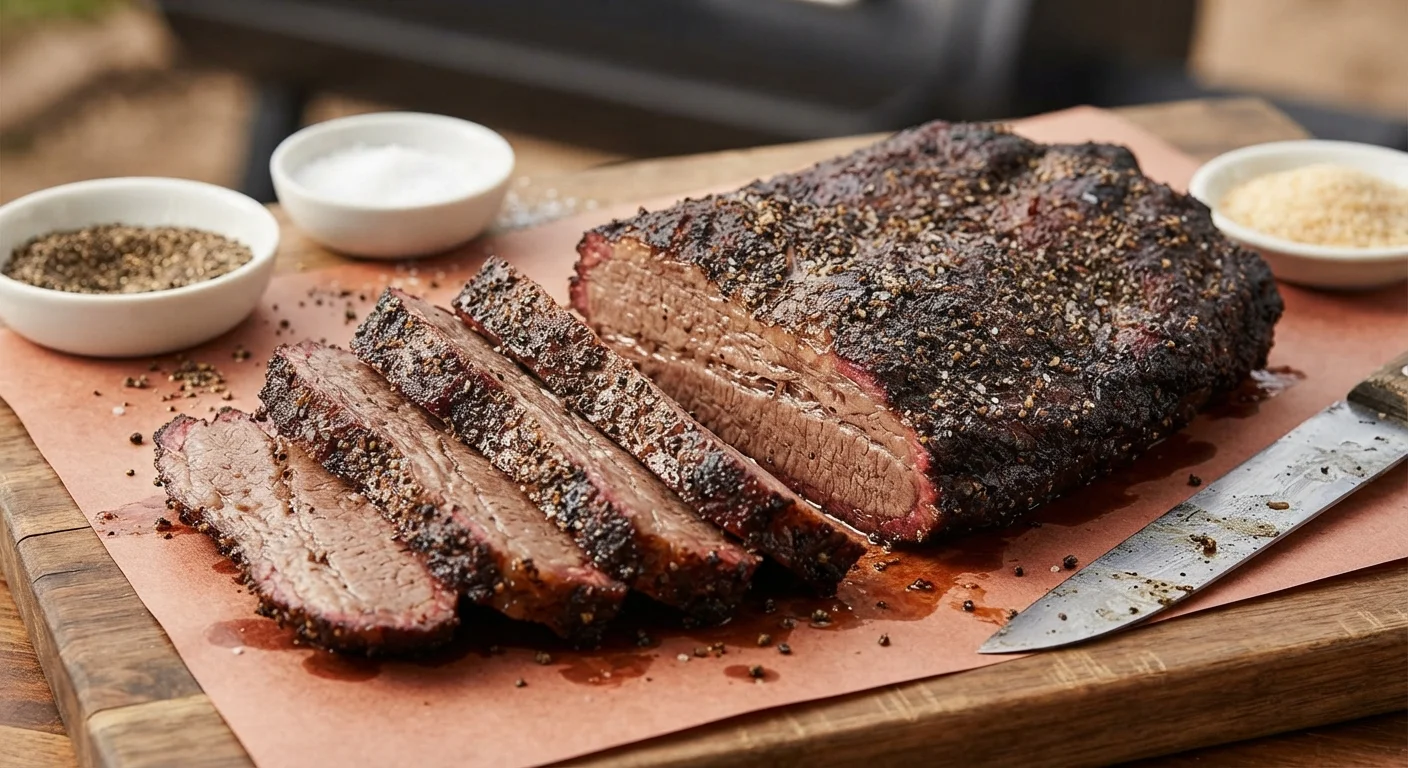
The first time I tried brisket at Terry Black’s in Austin, what stuck with me wasn’t some complicated spice blend -it was how little was actually going on, and how much flavor came out of it anyway.
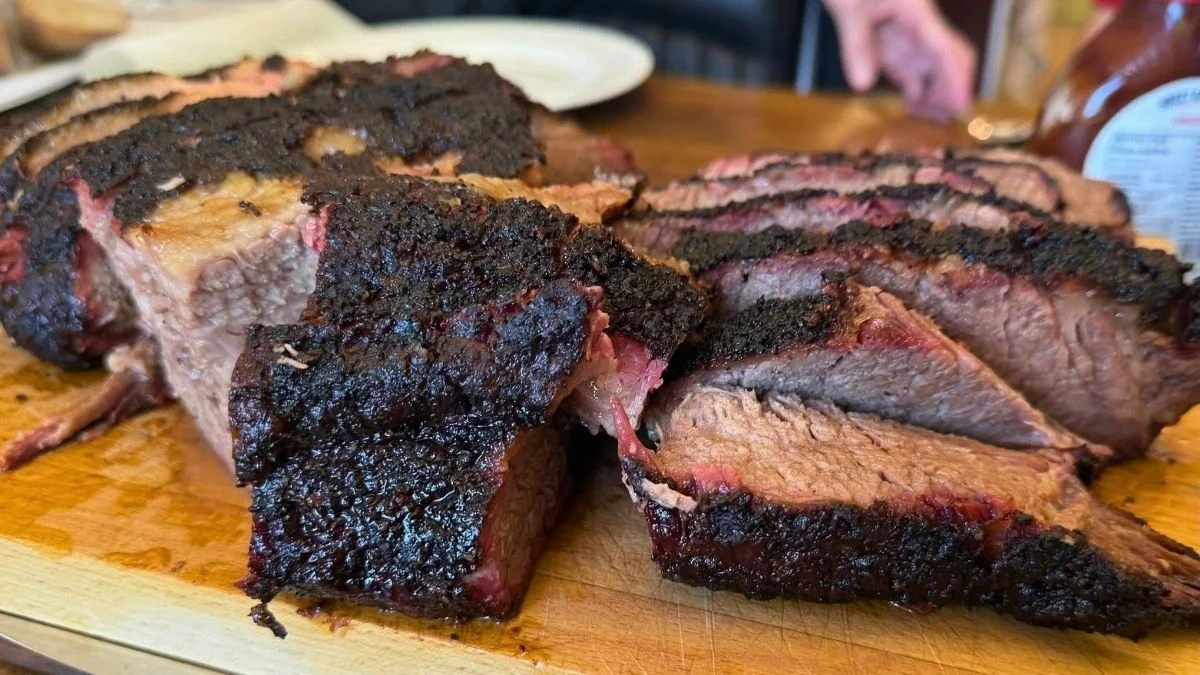
Just a thick, cracking bark built from coarse black pepper and salt, wrapped around meat that tasted purely of itself. That simplicity sent me down the rabbit hole of recreating a Terry Black’s-style brisket rub at home, testing ratios until the bark sounded right under a knife.
Quick note: since the quantities below are my best home-kitchen approximation of a restaurant technique, taste as you go and adjust the ratio to your own preference before your next cook.
What Is Terry Black’s-Style Brisket Rub and Why Do Fans Love It?
A Terry Black’s-style brisket rub is about as minimal as barbecue seasoning gets: just coarse black pepper and kosher salt, often close to equal parts by volume. No brown sugar, no chili powder blend, no dozen-ingredient spice cabinet raid. The real magic happens on the smoker, not in the mixing bowl -the pepper toasts and darkens over hours of low, steady heat, forming the deep, craggy crust that Central Texas brisket is famous for.
Fans love this style because it lets the beef do the talking. Compare it to a Memphis or Kansas City rub, both of which lean sweeter and often include paprika, cumin, or brown sugar for a stickier, more candied crust -the Texas approach skips all of that entirely. It’s less about seasoning the meat and more about seasoning the smoke itself. That restraint is exactly why this style of Texas brisket rub has such a devoted following among barbecue purists.
The History Behind Central Texas Brisket Rub
Central Texas barbecue traces back to German and Czech immigrant meat markets that settled the region in the 1800s, where smoked meat was sold plainly, often wrapped in butcher paper with nothing more than salt and pepper for seasoning. That tradition has held remarkably steady for well over a century.
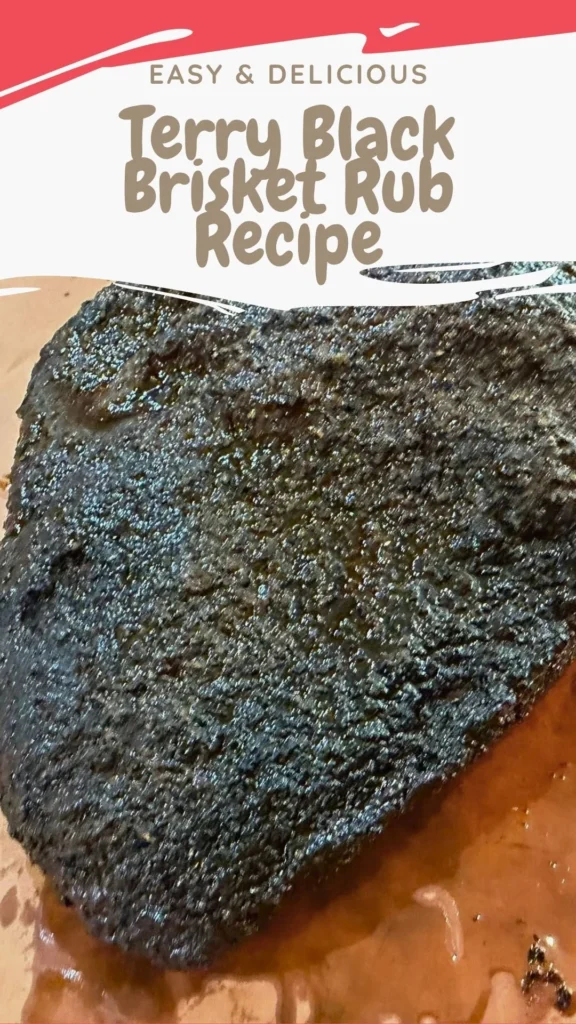
Terry Black’s Barbecue itself is a newer name carrying on that old approach. It opened in Austin in 2014, started by the children of longtime pitmaster Terry Black after a split from the original Black’s Barbecue in Lockhart -a family business with roots going back to 1932. They named the new restaurant in tribute to their father and the barbecue knowledge he’d passed down.
What separates this style from newer, trend-driven rubs is exactly what it leaves out. As competition-circuit barbecue pushed toward sweeter, more layered spice blends, Central Texas joints like Terry Black’s held the line on doing less, better.
Key Ingredients That Give This Brisket Rub Its Signature Flavor
Coarse Black Pepper (16-Mesh): This is the backbone of Texas-style bark. Coarse-ground pepper -often sold as 16-mesh at butcher supply stores -clings to the meat’s surface and toasts into that signature dark, craggy crust over a long smoke. Standard table-ground pepper is too fine and will scorch or blow away.
Kosher Salt: Salt does the real seasoning work, dissolving into the meat overnight while the pepper stays put on the surface to build bark. Kosher salt’s larger crystal size makes it far easier to apply evenly than fine table salt.
Granulated Onion and Garlic (Backyard Blend): For a fuller-flavored variation, granulated onion and garlic add savory depth without turning the rub powdery or wet.
Paprika: Used sparingly, it adds color and a mild, slightly sweet undertone -entirely optional if you want to stay closer to the purist version.
Optional Add-Ins: A pinch of celery salt, sumac, or extra garlic can round out the profile, but restraint matters here. If you can’t taste an ingredient in the finished brisket, it isn’t earning its place in the rub.
Terry Black’s-Style Brisket Rub -Ingredients
Classic Texas Rub (salt & pepper only):
| Ingredient | Amount | Notes |
|---|---|---|
| Coarse black pepper | ½ cup | 16-mesh grind is the traditional Texas choice |
| Kosher salt | ½ cup | Morton is saltier by volume than Diamond Crystal -weigh it if you want consistent results |
Backyard Blend (for more depth):
| Ingredient | Amount | Notes |
|---|---|---|
| Coarse salt | ¼ cup | |
| Coarse black pepper | ½ cup | |
| Granulated onion | 2 tbsp | Amount is an estimate -adjust to taste on your first cook |
| Granulated garlic | 2 tbsp | Same note -start here and dial in |
| Paprika | 1 tbsp | Omit for a more purist result |
Optional pinches: celery salt, sumac, extra paprika, or garlic powder -add sparingly so the rub stays coarse rather than powdery, since texture is what builds the crust.
Binder (optional): yellow mustard, mayo, oil, or water, applied in a thin layer before the rub. It’s a helpful adhesive if you trimmed the brisket a day ahead and the surface dried out in the fridge -skip it on a brisket fresh from the package.
Shortcut option: Terry Black’s sells a ready-made Beef Dry Rub at retail, which some home cooks blend with a homemade batch for a hybrid flavor.
Yield: about 1 cup of rub -enough to generously coat one whole packer brisket, though coverage will vary with brisket size, so keep extra on hand.
Tools You Need to Make This Brisket Rub at Home
- Mixing bowl or lidded jar (for shaking the rub together)
- Measuring cups and spoons
- Kitchen scale (optional, but useful for consistent salt measuring)
- Sharp boning or trimming knife
- Cutting board
- Plastic wrap (for the overnight rest)
- Wire rack and rimmed sheet pan
- Smoker (offset preferred, but any smoker works)
- Instant-read or leave-in probe thermometer
- Spray bottle, if spritzing
- Butcher paper or foil, for wrapping
- Insulated cooler or oven, for holding
Recipe Snapshot
- Rub prep: under 10 minutes
- Seasoning time: overnight in the fridge
- Yield: about 1 cup of rub
- Cook time: Terry Black’s runs roughly 1 hour 10 minutes per pound in large offset pits; at home, cook to probe tenderness rather than the clock
Steps to Make Terry Black’s-Style Brisket Rub
1. Choose your brisket
Prime grade has the most marbling and is the most forgiving for a long smoke -it’s mainly what Terry Black’s uses. Choice is a solid balance of quality and price. Select is leanest and dries out easily, so handle it with extra care.
2. Trim the fat cap
to about ¼ inch. Bark can form on fat, but it stays soft and tends to slide off rather than crisp up.
3. Mix the rub
in a bowl or shake it together in a jar until evenly combined.
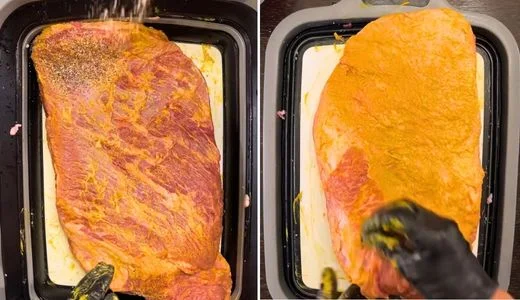
4. Apply a binder
if using, in a thin coat over the trimmed brisket.
5. Season evenly
Start on the meat side, then finish on the fat side -starting fat-side-up means flipping repeatedly, which leaves a splotchy coat. Season the ends first, then the flat, keeping coverage even on every surface.
6. Rest overnight
Wrap the seasoned brisket in plastic and refrigerate at or below 40°F. The salt dissolves into the meat overnight while the pepper stays on the surface to build bark.
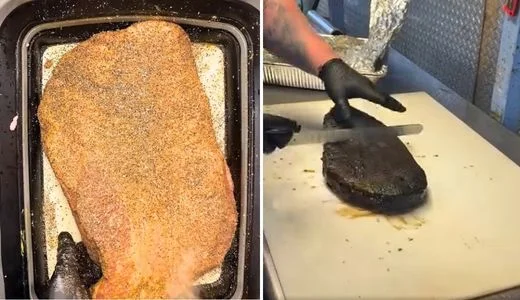
7. Smoke low and slow
Keep airflow moving -an open firebox and damper help dry the surface, which is what builds real bark. A steady 225°F works well, or a stepped approach moving up through 225°F, 265°F, and 300°F.
8. Spritz lightly, if at all
starting around the 3-hour mark once the rub has set and the surface has dried. Don’t let liquid pool on top – tilt the brisket to drain any excess.
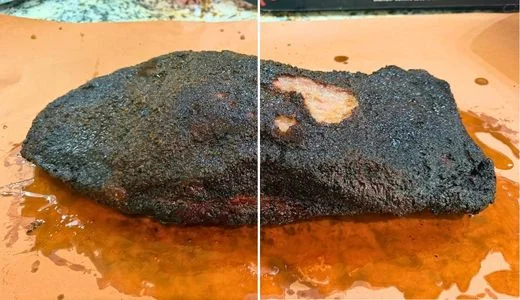
9. Blast the fat
About 3 hours before you expect to wrap, raise the smoker temperature by roughly 30°F to help render the remaining fat.
10. Wrap when the bark looks right
often in foil with a bit of beef tallow. Go by tenderness rather than a fixed number, though most cooks pull somewhere between 190°F and 205°F internal.
11. Rest before holding
Don’t move it straight into a towel, cooler, or turned-off oven -let it rest out in the open air until it drops to about 150°F, since carryover heat will keep cooking it otherwise.
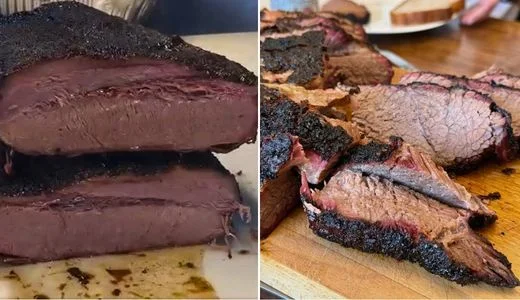
12. Hold it hot
at 140°F or above, for at least 4 hours and up to overnight for the best texture.
Pro Tips for Getting This Texas Brisket Rub Right
1. Weigh your salt, don’t just measure by volume
Morton kosher salt is noticeably saltier per cup than Diamond Crystal because the crystal size differs. If you switch brands without adjusting, your brisket can turn out over- or under-seasoned even though you followed the recipe exactly.
2. Season meat-side first
Applying rub fat-side-up first means constant flipping, and the coating ends up uneven and splotchy by the time you’re done. Meat side, then fat side, keeps the coverage consistent.
3. Don’t overload the extras
In the backyard blend, granulated onion and garlic should stay in the background. Too much of either -or piling on multiple optional add-ins at once -turns the rub powdery and can keep it from binding into a proper crust.
4. Respect the overnight rest
This isn’t optional if you want real bark. The salt needs time to work into the meat while the surface has a chance to dry out slightly in the fridge.
5. Airflow matters more than almost anything else
Wind, humidity, and even cold weather all affect how your bark turns out on a given day. If your bark seems thin, look at your airflow setup before blaming the rub.
6. Don’t rest straight into a cooler
Pulling the brisket at your wrap temperature and immediately wrapping it in towels traps carryover heat, which keeps cooking the meat past where you want it. Let it breathe first.
7. Reheat gently
High, dry heat the next day will dry out already-cooked brisket fast -go low and add moisture back in.
Easy Variations to Customize This Brisket Rub
The ratio of pepper to salt is genuinely up for debate, even among experienced pitmasters- start at 1:1 by volume and adjust from there:
- 1:1 (Classic Central Texas): The traditional “half and half” approach, and the safest starting point.
- 60:40 (pepper-forward): A slightly heavier pepper lean for more visible bark and bite.
- 2:1 or 3:1 (pepper-heavy): Popular in some homemade versions for an even bolder pepper crust.
Backyard Blend: Add granulated onion, garlic, and a touch of paprika for more complexity beyond salt and pepper alone.
Jar Shortcut: Blend Terry Black’s retail Beef Dry Rub with your own homemade mix for a hybrid flavor.
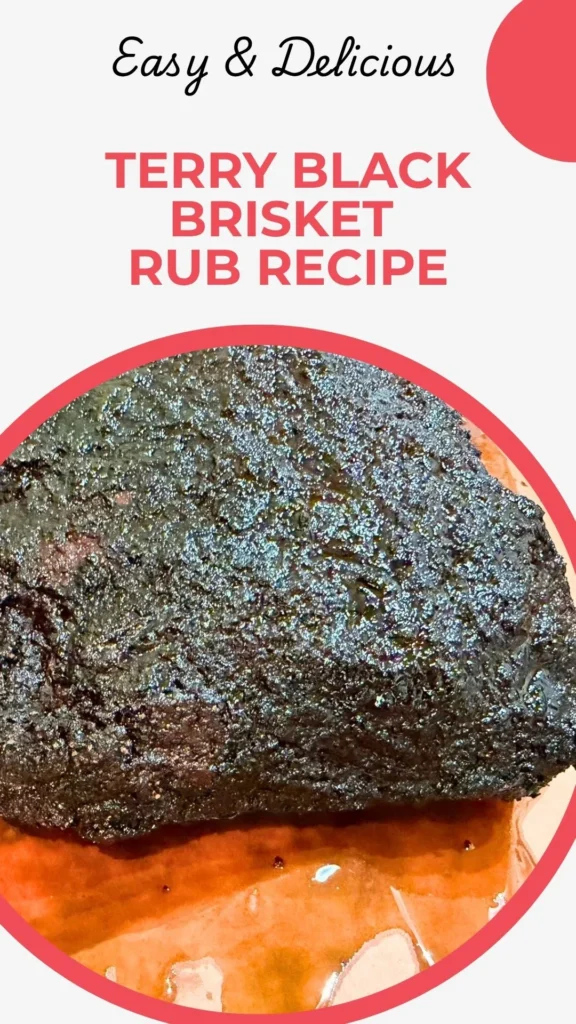
Kettle Grill Version: This rub works well with the snake method on a standard kettle grill if you don’t have an offset smoker.
Best Ways to Serve Terry Black’s-Style Brisket in Your Meals
Once your brisket is rubbed, smoked, and rested, there’s a lot you can do with it beyond the classic tray.
Classic Texas Tray: Serve sliced straight off the cutting board on butcher paper with white bread, dill pickles, raw onion slices, and a side of pinto beans or potato salad. This is the most traditional way to experience the rub’s flavor, since nothing competes with the bark.
Brisket Sandwich: Pile chopped or sliced brisket onto a soft bun with pickles and a light barbecue sauce on the side -the bark holds up well even after sitting in a sandwich for a few minutes.
Brisket Tacos: Chop leftover brisket and fold it into warm corn tortillas with diced onion, cilantro, and a squeeze of lime. The peppery bark pairs surprisingly well with a bright, acidic salsa.
Loaded Baked Potato: Top a baked potato with chopped brisket, cheese, sour cream, and green onion for an easy weeknight use of leftovers.
Brisket Mac and Cheese: Stir chopped brisket into a creamy Terry Black’s Mac and Cheese Recipe for a rich, smoky twist on a comfort food classic.
Brisket Hash: Dice leftover brisket with potatoes and onions, pan-fry until crisp, and top with a fried egg for a hearty breakfast that stretches your leftovers further.
Brisket Chili: Swap ground beef for chopped brisket in your usual chili recipe -the existing seasoning means you can often use less additional spice.
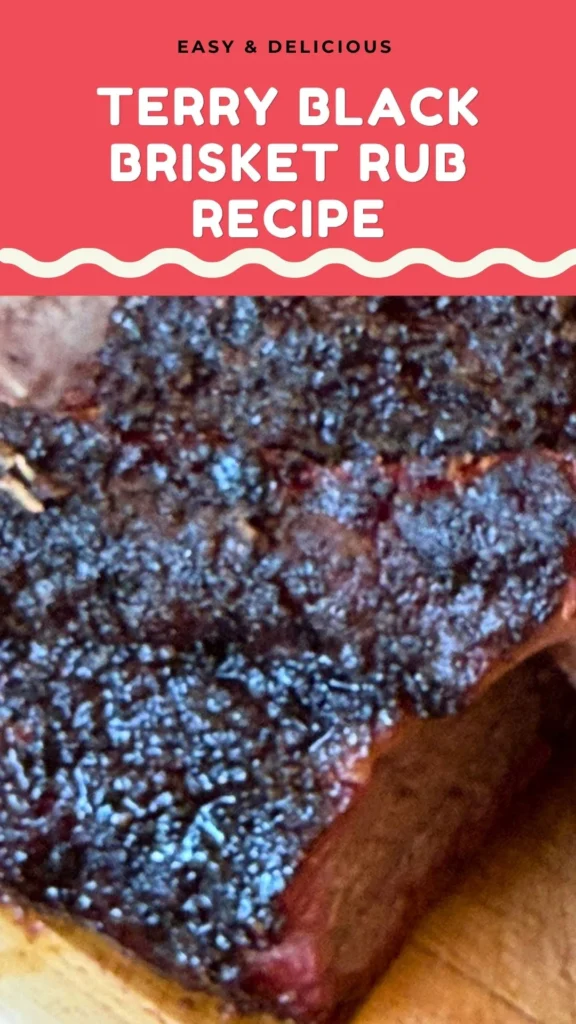
However you serve it, the bark is the star, so avoid drowning it in sauce before people get a chance to taste it plain first.
How to Store This Brisket Rub (and Leftover Brisket)
The rub itself: Store in an airtight jar in a cool, dark place, away from heat and direct light. It will keep its flavor for several months.
Raw, seasoned brisket: Keep at 40°F or below in the refrigerator until you’re ready to smoke it -don’t let it sit out at room temperature.
Cooked brisket: Refrigerate leftovers in an airtight container within two hours of cooking, and use within 4 days. For longer storage, freeze sliced or whole for up to 3 months.
Reheating: Wrap portions in foil with a spoonful of reserved tallow or beef broth, then warm in a 225°F oven or smoker until the internal temperature reaches 140°F. This keeps the meat moist. Avoid the microwave, which tends to dry brisket out quickly.
Nutrition Facts and Dietary Notes
Per 1 tablespoon of rub (classic salt & pepper version):
| Calories | ~5 kcal |
| Sodium | ~1,600mg |
| Carbohydrates | ~1g |
| Fat/Protein | negligible |
This rub is essentially calorie-free -its nutritional impact comes almost entirely from sodium, so if you’re watching sodium intake, consider shifting the ratio toward more pepper and less salt.
Gluten-Free: Yes, both the classic and backyard blends are naturally gluten-free.
Keto / Low-Carb: Yes -negligible carbs per serving.
Paleo-Friendly: Yes, using whole-food ingredients only.
The finished smoked brisket itself is a excellent source of protein and iron, though total fat and calories will vary significantly depending on the cut and how much fat cap you trim before cooking.
Terry Black Brisket Rub Recipe
Ingredients
Method
- Prime grade has the most marbling and is the most forgiving for a long smoke -it’s mainly what Terry Black’s uses. Choice is a solid balance of quality and price. Select is leanest and dries out easily, so handle it with extra care.
- to about ¼ inch. Bark can form on fat, but it stays soft and tends to slide off rather than crisp up.
- in a bowl or shake it together in a jar until evenly combined.
- if using, in a thin coat over the trimmed brisket.
- Start on the meat side, then finish on the fat side -starting fat-side-up means flipping repeatedly, which leaves a splotchy coat. Season the ends first, then the flat, keeping coverage even on every surface.
- Wrap the seasoned brisket in plastic and refrigerate at or below 40°F. The salt dissolves into the meat overnight while the pepper stays on the surface to build bark.
- Keep airflow moving -an open firebox and damper help dry the surface, which is what builds real bark. A steady 225°F works well, or a stepped approach moving up through 225°F, 265°F, and 300°F.
- starting around the 3-hour mark once the rub has set and the surface has dried. Don’t let liquid pool on top – tilt the brisket to drain any excess.
- About 3 hours before you expect to wrap, raise the smoker temperature by roughly 30°F to help render the remaining fat.
- often in foil with a bit of beef tallow. Go by tenderness rather than a fixed number, though most cooks pull somewhere between 190°F and 205°F internal.
- Don’t move it straight into a towel, cooler, or turned-off oven -let it rest out in the open air until it drops to about 150°F, since carryover heat will keep cooking it otherwise.
- at 140°F or above, for at least 4 hours and up to overnight for the best texture.
Video
Notes
This Terry Black’s-style brisket rub proves that great Central Texas barbecue doesn’t need a long ingredient list -just quality salt, coarse pepper, patience, and steady airflow. It’s a copycat built from tradition and testing, not an official formula, so treat the ratios as a starting point and make it yours over a few cooks.
Try it on your next brisket and let me know in the comments how your bark turned out, and which pepper-to-salt ratio you landed on. If you’re new here, check out more Central Texas-inspired barbecue recipes elsewhere on the blog.
We’d love to hear what you think of this recipe! Give it a try and let us know how it turned out by leaving a comment below. Don’t forget to follow us on Pinterest, Facebook and YouTube for more delicious recipes, cooking inspiration, and kitchen tips. Your feedback and support help us continue creating content you’ll love!