
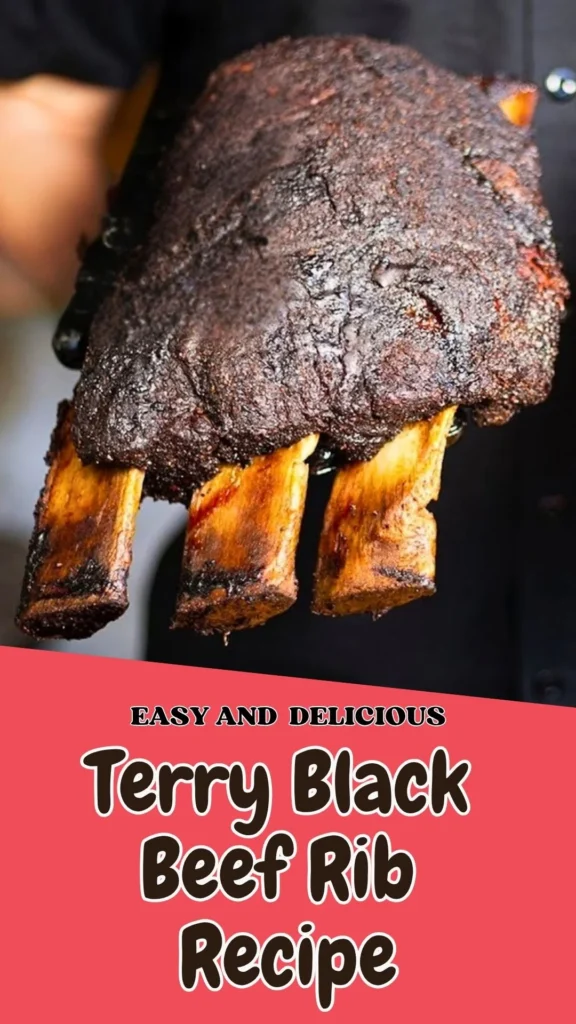
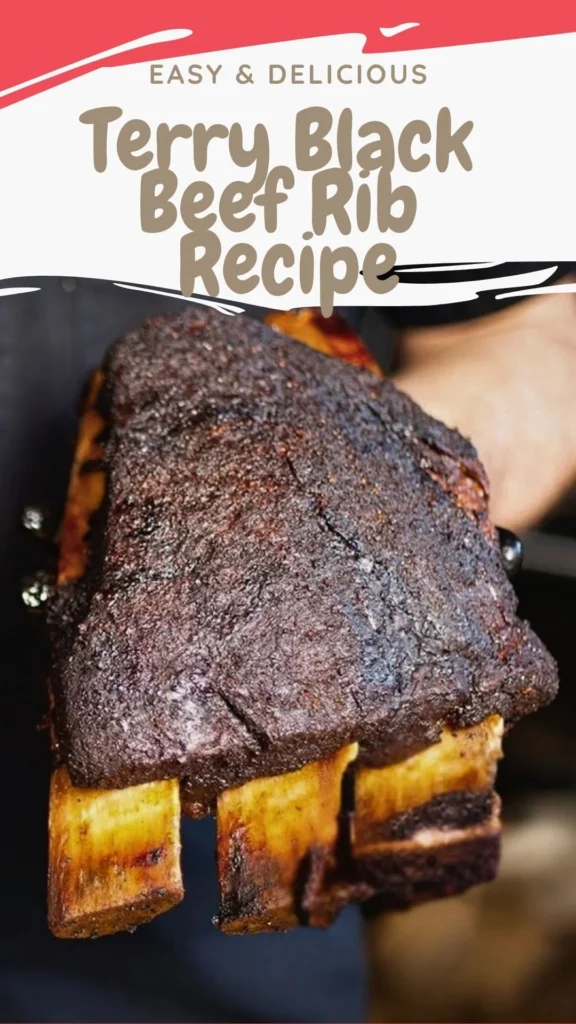
There’s a reason people drive across Austin just for a bite of this Terry Black’s beef rib recipe -the bark cracks, the meat practically slides off the bone, and that peppery crust hits before the beefy, fat-rendered interior even has a chance to register.
I’d eaten plenty of smoked ribs before I finally understood what made this one different: it’s not a rack of chuck ribs dressed up to look impressive. It’s the real cut, treated with restraint -mustard slather, a straight 50/50 salt-and-pepper bark, and hours of patient smoke.
This is my at-home version of that pit process, built from the trim and seasoning technique Terry Black’s actually uses, with smoking times filled in from standard Central Texas offset practice. Note: this takes most of a day, so plan your smoker time accordingly.
What Is Terry Black’s Beef Rib and Why Do Fans Love It?
Terry Black’s beef rib is a smoked beef short plate rib -specifically ribs six through eight on the cow, not the smaller chuck ribs found higher up. It’s become one of the most recognizable dishes to come out of the modern Texas barbecue scene, largely because plate ribs are enormous, heavily marbled, and forgiving to smoke low and slow.
Fans love it because it delivers what brisket promises but doesn’t always keep: consistent, jiggly tenderness with almost no risk of drying out, thanks to the thick fat cap running through the meat. Compared to pork spare ribs or baby backs, this cut is bigger, beefier, and built for a much longer cook.
It’s often nicknamed “dino bones” or simply “short ribs” in wider barbecue circles -a nod to their sheer size on the plate. That size, combined with a deep peppery bark, is exactly why this cut has such a devoted following among barbecue purists.
The Nostalgic History Behind Terry Black’s Beef Rib
Terry Black’s Barbecue, founded by brothers Mike and Mark Black, carries on a Central Texas smoking tradition that traces back generations in their family. Beef plate ribs specifically gained mainstream popularity as pitmasters across Texas started spotlighting cuts that had historically been overlooked in favor of brisket and sausage.
What makes plate ribs distinct is the anatomy: chuck ribs (ribs two through five) come from a leaner, less marbled section of the cow and were once the more common “beef rib” found at butcher counters. Plate ribs (ribs six through eight) sat lower on the animal, carried far more fat, and were harder to source -until barbecue joints like Terry Black’s built their reputation on seeking them out specifically.
On a busy production day, a shop like this might smoke anywhere from around 50 racks early in the week up toward 95 by Saturday -a scale that says a lot about just how in-demand this cut has become.
Key Ingredients That Give This Beef Rib Its Signature Flavor
This recipe works because of restraint, not complexity -every ingredient earns its place.
Beef Short Plate Ribs (Ribs 6-8): The foundation of the whole dish. This is the best-marbled rib on the cow, and that fat is what renders down into a self-basting, jiggly-tender texture over the long cook. Chuck ribs simply can’t replicate this.
Yellow Mustard: Acts as a binder, not a flavor- it helps the salt and pepper adhere evenly to the meat’s surface without adding a noticeable mustard taste once smoked.
Distilled White Vinegar: Thins the mustard into a light, brushable slather and adds a subtle tang that helps the bark set properly. Apple cider vinegar works as a substitute with a slightly sweeter edge.
Kosher Salt: Draws moisture to the surface early in the cook, which combines with the fat and pepper to build the signature dark bark.
Coarse Black Pepper: Used in equal measure to the salt -this straight 50/50 ratio is the backbone of the Central Texas “dirt” bark that defines the region’s style.
Terry Black’s Beef Rib Recipe -Ingredient List
| Ingredient | Quantity | Notes & Substitutions |
|---|---|---|
| Beef short plate rib rack (3-bone, ribs 6-8) | 1 rack | Ask your butcher specifically for “beef plate ribs” or “ribs 6 through 8” -asking for generic “beef ribs” often gets you the smaller chuck cut instead |
| Yellow mustard | ⅓ cup | Any basic yellow mustard works; this is a binder, not a flavor ingredient |
| Distilled white vinegar | ⅓ cup | Apple cider vinegar can be substituted for a slightly sweeter note |
| Kosher salt | 3 tbsp | Don’t substitute fine table salt -it’s far saltier by volume |
| Coarse black pepper | 3 tbsp | Coarse or cracked pepper is essential for proper bark texture; pre-ground fine pepper will burn and taste bitter over a long cook |
Tools You Need to Make This Beef Rib Recipe at Home
- Offset smoker (or pellet smoker set up for low-and-slow cooking)
- Post oak wood (or another mild hardwood if unavailable)
- Sharp boning or trimming knife
- Basting or pastry brush (for the mustard slather)
- Instant-read meat thermometer or leave-in probe
- Butcher paper (unwaxed, food-grade)
- Cutting board large enough for a full rack
- Insulated cooler (optional, for extended resting)
Prep Time: 20 minutes
Cook Time: 8–10 hours
Rest Time: 30–45 minutes
Total Time: Roughly 9–11 hours
Servings: 3 (one bone per person, generous portions)
Steps to Make This Terry Black’s Beef Rib Recipe
Step 1 -Pick the Right Cut
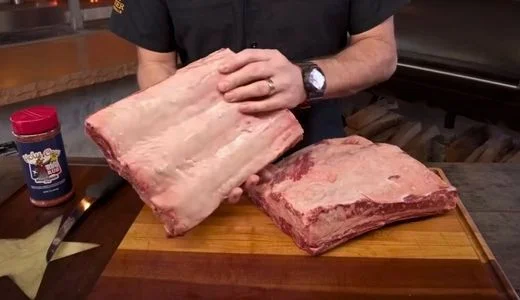
Ask your butcher for the short plate rib -specifically ribs six, seven, and eight, not the smaller chuck ribs (ribs two through five). This cut is the best-marbled rib on the cow and needs very little trimming beyond removing any loose, “fluffy” fat.
Step 2 -Even Out the Rack
Beef ribs naturally run thicker on one end and thinner on the other, and the thin end will shrink faster on the pit. If you’re breaking down a larger piece yourself, cut at a slight angle to distribute the meat as evenly as possible across the rack.
Step 3 -Apply a Thin Slather
Mix the yellow mustard and vinegar together and brush a thin, even layer over the entire rack, top and bottom. Keep the layer light -too heavy a slather prevents the bark from setting properly and it’ll flake off later in the cook.
Step 4 – Season 50/50, Salt and Pepper
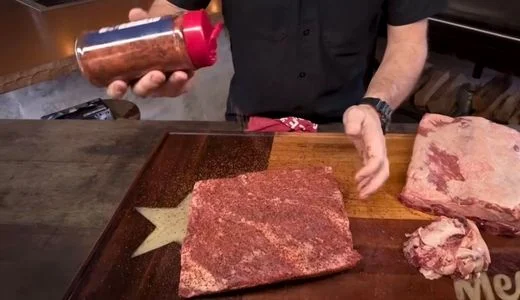
With the mustard side facing up, apply an even coat of kosher salt and coarse black pepper in a straight 50/50 ratio. Give the top a fuller coat and the bottom a lighter one, but season both sides -don’t leave the bone side bare. Pat the seasoning in gently with your hand; rubbing it in causes clumping instead of an even bark.
Step 5 -Fire Up the Pit
Get your offset smoker running clean at 250–275°F using post oak. Beef ribs can handle more heat than brisket thanks to their heavy marbling, so don’t hesitate to run toward the higher end of that range.
Step 6 -Load Thick-End Toward the Heat
Place the rack with its thicker, meatier end closer to the firebox, letting the thinner end trail further away. Keep an eye on the rack as it cooks -if any lean section starts pulling back or drying out, rotate the rack so that area faces away from direct heat.
Step 7 -Smoke to Set the Bark (~5 hours)
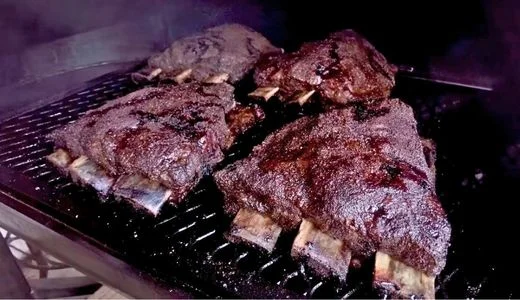
Let the rack cook undisturbed until a deep, dark bark has formed and internal temperature reaches the low-to-mid 170s°F. Rotate as needed per Step 6.
Step 8 -Wrap to Push Through
Once the bark is set to your liking, wrap the rack tightly in butcher paper. This locks in moisture and carries the ribs through the rest of the cook without sacrificing the crust you just built.
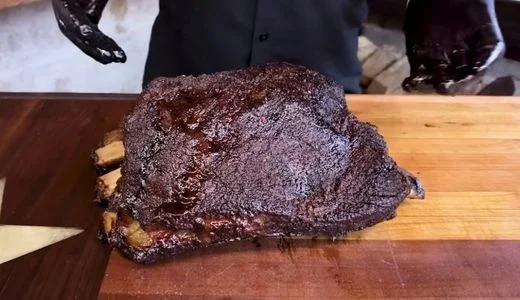
Step 9 -Finish Low and Slow (~3 hours)
Continue cooking until a probe slides in with zero resistance and the meat feels loose and jiggly. Beef ribs typically finish a bit hotter than brisket -expect an internal temperature in the high-190s to low-210s°F.
Step 10 -Rest
Let the ribs rest for at least 30–45 minutes before slicing. This allows the juices to redistribute throughout the meat instead of spilling out onto the cutting board.
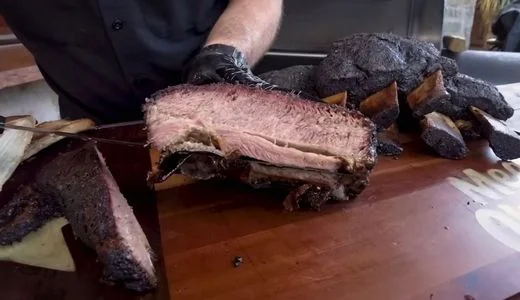
Step 11 -Slice and Serve
Cut between the bones and serve immediately while the bark is still crisp.
Pro Tips for Getting the Terry Black’s Beef Rib Flavor Just Right
1. Don’t over-trim the fat
This is the single most common mistake with plate ribs. Unlike brisket, this cut needs almost no trimming beyond loose, “fluffy” surface fat. That marbling is exactly what renders down into moisture and flavor over the long cook -trim too aggressively and you’ll end up with a drier result.
2. Respect the mustard-slather ratio
A thin, even layer is the goal. A heavy coat traps moisture at the surface and prevents the bark from setting, which means it’ll flake or slide off later in the cook instead of forming that signature dark crust.
3. Pat, don’t rub, the seasoning
Rubbing the salt and pepper into the meat causes it to clump unevenly. Patting it in gently creates the consistent, even “dirt” bark that Central Texas barbecue is known for.
4. Manage the thin end
Because plate ribs taper from thick to thin, the thinner section is at real risk of overcooking or drying out. Rotating the rack away from direct heat when that section starts to pull back is a small habit that makes a big difference in the final result.
5. Trust the feel, not just the temperature
The stated finishing range (high-190s to low-210s°F) is a guide, not a hard rule. The real test is whether a probe slides in with zero resistance and the meat feels loose and jiggly -that’s doneness, regardless of what the thermometer says.
6. Don’t skip the rest
Cutting into the rack too early lets all those hard-earned juices run out onto the board instead of staying in the meat.
Easy Variations to Customize This Beef Rib Recipe
Spicier Bark: Add a tablespoon of coarse cayenne or chili powder to the salt-and-pepper mix for a bark with real heat behind it.
Garlic-Forward: Blend granulated garlic into the pepper rub for a deeper, savory edge alongside the classic 50/50 base.
Different Wood: Post oak is traditional, but hickory or a blend of oak and pecan will give a slightly sweeter, more pronounced smoke flavor.
Sauced Finish: While purists serve this bark-forward and unsauced, a light brush of thin, vinegar-based barbecue sauce during the last 20 minutes of the cook adds a subtle glaze without overwhelming the pepper crust.
Pellet Smoker Adaptation: No offset? A pellet smoker set to 250°F with the same wrap-and-finish timeline works well, though you may lose a bit of the smoke intensity.
Best Ways to Serve Terry Black’s Beef Rib in Your Meals
This cut is substantial enough to be the centerpiece of the meal, but there are plenty of ways to build a full spread around it.
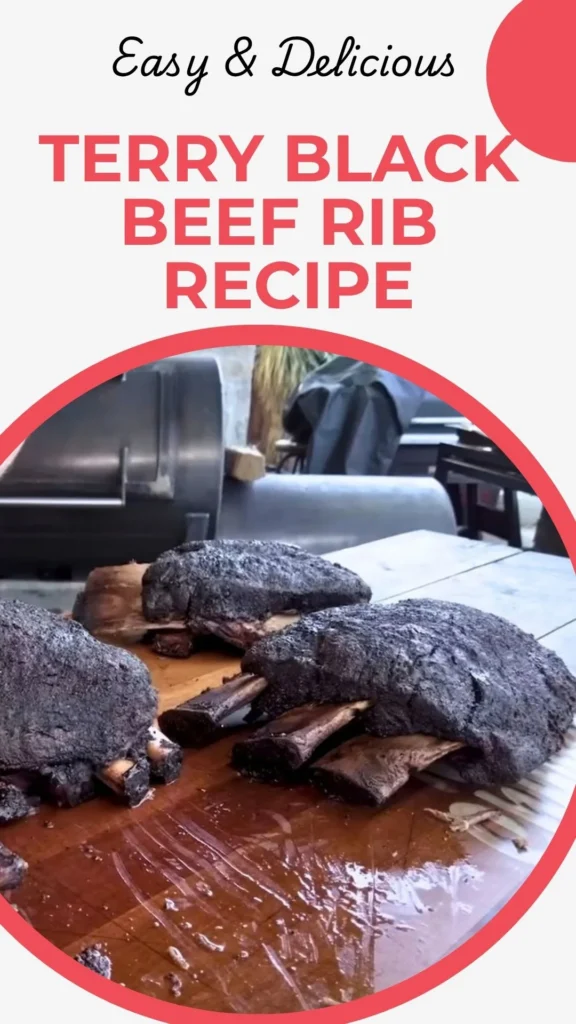
Classic Texas Barbecue Tray: Serve the sliced rib straight on butcher paper alongside white bread, dill pickles, raw onion slices, and a small cup of thin barbecue sauce on the side. This is the most authentic way to experience the dish, letting the bark and smoke ring do all the talking.
With Traditional Sides: Pair it with classic Central Texas barbecue sides-creamy potato salad, tangy coleslaw, pinto beans, and our Terry Black’s Creamed Corn Recipe. The sweetness and creaminess of the corn complement the rich, smoky beef rib beautifully.
Over Mac and Cheese: Pull the meat off the bone and pile it over a bowl of creamy mac and cheese for a heartier, comfort-food take on the dish.
In Tacos: Shred leftover meat and stuff it into warm corn tortillas with pickled red onion, cilantro, and a squeeze of lime for a smoky twist on barbecue tacos.
On a Loaded Baked Potato: Top a baked potato with shredded beef rib meat, sour cream, chives, and shredded cheddar for a filling, one-plate meal.
As a Standalone Feast: Given the size of a single bone, one rib per person with a simple green salad is often more than enough – let the beef be the star without overcrowding the plate.
However you serve it, keep the accompaniments simple. This dish is built around restraint in the seasoning, and the sides should follow that same philosophy rather than compete with the smoke and pepper crust.
How to Store and Reheat Terry Black’s Beef Rib
Refrigerator: Store sliced or whole leftover ribs in an airtight container for up to 4 days.
Freezer: Wrap tightly in foil, then place in a freezer bag. Keeps well for up to 3 months. Thaw overnight in the refrigerator before reheating.
Reheating: Wrap the meat in foil with a splash of beef broth and reheat in a 250°F oven until warmed through – this method restores moisture without drying out the bark. A low-heat covered skillet also works for individual portions. Avoid the microwave if possible; it tends to make the exterior bark rubbery and uneven.
Nutrition Facts and Dietary Notes for Terry Black’s Beef Rib
Per serving (approx. one bone, based on 3 servings per rack):
| Calories | ~650 kcal |
| Protein | ~45g |
| Fat | ~50g |
| Carbohydrates | ~1g |
| Sodium | ~950mg |
Gluten-Free: Yes -this recipe contains no gluten-containing ingredients.
Dairy-Free: Yes, entirely.
Keto / Low-Carb: Yes -with virtually no carbohydrates, this fits well within a ketogenic or low-carb eating plan.
Paleo-Friendly: Yes, when served without a sugar-based barbecue sauce.
Note on Fat Content: This is a rich, fat-forward cut by design -the marbling is what makes it tender. Moderation is worth keeping in mind given the calorie and fat density per serving.
Nutritional values are estimates and will vary based on the specific rack’s fat content and portion size.
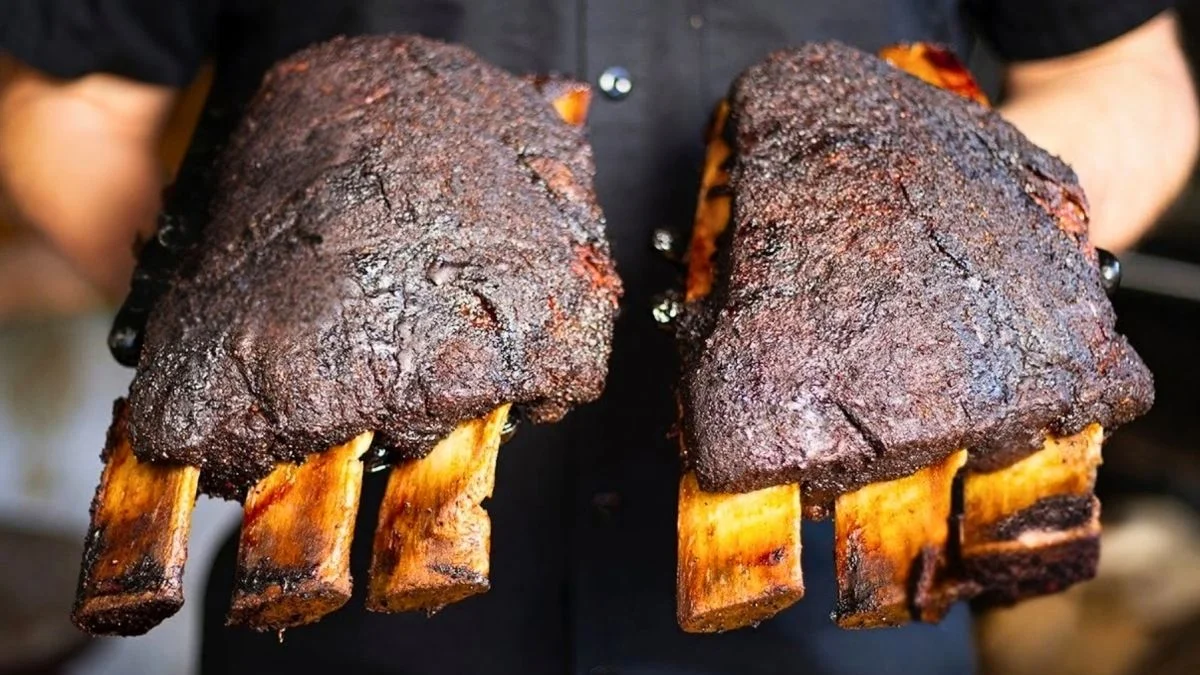
Terry Black Beef Rib Recipe
Ingredients
Method
- Ask your butcher for the short plate rib -specifically ribs six, seven, and eight, not the smaller chuck ribs (ribs two through five). This cut is the best-marbled rib on the cow and needs very little trimming beyond removing any loose, “fluffy” fat.
- Beef ribs naturally run thicker on one end and thinner on the other, and the thin end will shrink faster on the pit. If you’re breaking down a larger piece yourself, cut at a slight angle to distribute the meat as evenly as possible across the rack.
- Mix the yellow mustard and vinegar together and brush a thin, even layer over the entire rack, top and bottom. Keep the layer light -too heavy a slather prevents the bark from setting properly and it’ll flake off later in the cook.
- With the mustard side facing up, apply an even coat of kosher salt and coarse black pepper in a straight 50/50 ratio. Give the top a fuller coat and the bottom a lighter one, but season both sides -don’t leave the bone side bare. Pat the seasoning in gently with your hand; rubbing it in causes clumping instead of an even bark.
- Get your offset smoker running clean at 250–275°F using post oak. Beef ribs can handle more heat than brisket thanks to their heavy marbling, so don’t hesitate to run toward the higher end of that range.
- Place the rack with its thicker, meatier end closer to the firebox, letting the thinner end trail further away. Keep an eye on the rack as it cooks -if any lean section starts pulling back or drying out, rotate the rack so that area faces away from direct heat.
- Let the rack cook undisturbed until a deep, dark bark has formed and internal temperature reaches the low-to-mid 170s°F. Rotate as needed per Step 6.
- Once the bark is set to your liking, wrap the rack tightly in butcher paper. This locks in moisture and carries the ribs through the rest of the cook without sacrificing the crust you just built.
- Continue cooking until a probe slides in with zero resistance and the meat feels loose and jiggly. Beef ribs typically finish a bit hotter than brisket -expect an internal temperature in the high-190s to low-210s°F.
- Let the ribs rest for at least 30–45 minutes before slicing. This allows the juices to redistribute throughout the meat instead of spilling out onto the cutting board.
- Cut between the bones and serve immediately while the bark is still crisp.
Video
Notes
If you’ve been chasing that deep, peppery bark and jiggly-tender bite that made Terry Black’s beef rib famous, this recipe gets you there using the same trim, slather, and seasoning approach the pit actually uses. It takes patience -most of a day, start to finish -but the payoff is a rack of ribs that rivals what you’d wait in line for in Austin.
Give it a try and let me know how your bark turned out in the comments below! Did you run post oak or try a different wood? I’d love to hear how your cook went. And if you’re building out a full Texas barbecue spread, check out more smoked recipes on the blog.
We’d love to hear what you think of this recipe! Give it a try and let us know how it turned out by leaving a comment below. Don’t forget to follow us on Pinterest, Facebook and YouTube for more delicious recipes, cooking inspiration, and kitchen tips. Your feedback and support help us continue creating content you’ll love!