
The first time I made the Brenda Gantt cornbread recipe, I stood at my oven with zero expectations -and walked away with a golden, crispy-edged round of cornbread that made me wonder why I had ever bought a box mix. There is something almost magical about the way this recipe comes together. It is humble. Just a handful of pantry staples, a well-greased cast-iron skillet, and the kind of intuitive, pour-it-by-feel cooking wisdom that Brenda Gantt has made her trademark.
If you have been searching for a true Southern buttermilk cornbread recipe that skips the sugar, skips the fluff, and delivers a dense, tender, authentically Southern crumb -you have landed exactly where you need to be. This post walks you through every step, every tip, and every reason this recipe has taken the internet by storm.
Quick Note: This recipe uses self-rising cornmeal mix, whole buttermilk, and a cast-iron skillet. No baking powder to measure separately, no fuss. Just honest Southern cornbread.
What Is Brenda Gantt’s Cornbread and Why Do Fans Love It?
Brenda Gantt’s cornbread is a traditional Southern buttermilk cornbread -the kind that has lived in cast-iron skillets across Alabama kitchens for generations. It is not sweet. It is not cakey. It is a savory, golden, slightly crispy-bottomed bread that pairs with everything from butter beans to collard greens to a cold glass of sweet tea.
What sets it apart from grocery-store cornbread mixes or modern “skillet cornbread” recipes is the texture and the technique. The batter is mixed to a loose, pourable consistency using whole buttermilk, which gives the finished bread a moist, tender interior while the hot, greased cast iron delivers that signature crispy crust on the bottom and edges.
Fans also love the no-fuss approach. Brenda does not measure the buttermilk by the cup -she pours until it looks right. That kind of confident, eyeball cooking connects with home cooks who want to feel the recipe rather than follow it like a chemistry lab. It is accessible, nostalgic, and deeply satisfying to make.
The Nostalgic History Behind Southern Cast-Iron Cornbread
Cornbread is one of the oldest staples in Southern American cooking, tracing its roots to Native American corn-grinding traditions that European settlers adapted into their own kitchens. Long before baking powder was a pantry staple, Southern women were making simple corn pone and hoecakes with little more than ground cornmeal and water.
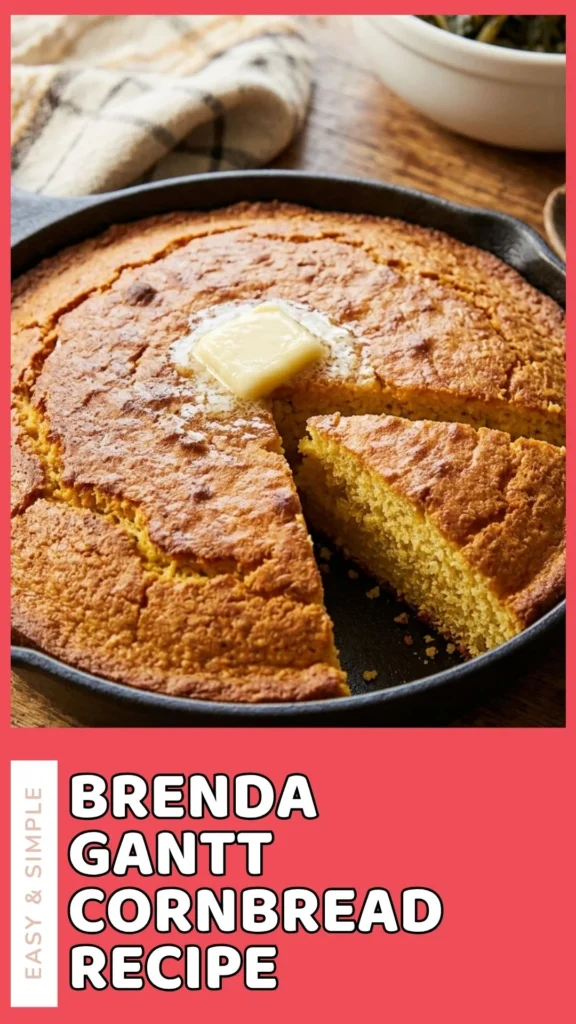
The cast-iron skillet version -the direct ancestor of Brenda Gantt’s recipe -became the standard method because cast iron distributed heat so evenly and retained it so well. That heavy, seasoned iron is what creates the crispy bottom crust that no ceramic baking dish can replicate.
Brenda Gantt, a home cook from Alabaster, Alabama, became a social media phenomenon in 2020 when a video of her making biscuits went wildly viral. Her cornbread recipe followed, drawing millions of viewers who recognized in her cooking the same food their grandmothers made. Her recipe is not a reinvention -it is a faithful preservation of the Southern buttermilk cornbread tradition, made accessible for a new generation of home cooks who never learned it from a grandmother of their own.
Key Ingredients That Give Brenda Gantt’s Cornbread Its Signature Southern Flavor
The genius of this recipe is in its restraint. Every ingredient carries weight, and understanding what each one does helps you get the result right every single time.
Self-Rising Cornmeal Mix is the foundation. It already contains the right ratio of cornmeal, flour, salt, and leavening, which is why this recipe requires no additional baking powder or salt. Brenda uses a brand with a scarecrow on the bag -White Lily Self-Rising Cornmeal Mix is the closest widely available match and is widely regarded as the gold standard for Southern cornbread.
Whole Buttermilk is non-negotiable for authentic flavor. The acidity reacts with the leavening in the cornmeal mix to create a light crumb, while the fat content keeps the interior moist. Low-fat buttermilk will work in a pinch, but whole buttermilk produces a noticeably richer result.
Eggs -Brenda used duck eggs in her viral video, which are larger and richer than standard chicken eggs. Standard large chicken eggs are a perfect direct substitute and are what most home cooks will use.
Shortening or Oil for the skillet provides the all-important crispy bottom crust. Solid shortening heated in the cast iron gives a slightly more traditional flavor, but vegetable oil works beautifully.
Brenda Gantt Cornbread Recipe Ingredients
| Ingredient | Quantity | Notes |
|---|---|---|
| Self-rising cornmeal mix | 2 cups | White Lily or similar; do not substitute plain cornmeal |
| Eggs | 2 large | Duck eggs used in original; chicken eggs work perfectly |
| Whole buttermilk | ~¾ to 1 cup | Added by eye -see consistency notes below |
| Shortening or vegetable oil | 2–3 tablespoons | For greasing the skillet generously |
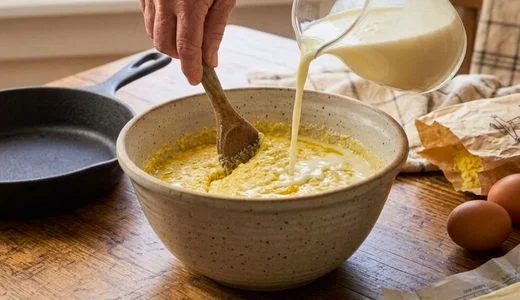
Consistency Note: The batter should be pourable but not watery -similar to a thick pancake batter. It should flow off the spoon easily and settle flat in the skillet. If it looks too stiff or gummy, add a splash more buttermilk and stir.
Substitutions:
- No buttermilk? Add 1 tablespoon of white vinegar or lemon juice to 1 cup of whole milk. Let it sit 5 minutes before using.
- No self-rising cornmeal mix? Use 2 cups plain cornmeal + 1 tablespoon baking powder + ½ teaspoon salt. Results will be slightly different in texture.
- Dairy-free? Unsweetened oat milk with a tablespoon of apple cider vinegar can substitute, though flavor will differ.
Tools You Need to Make Brenda Gantt’s Cornbread at Home
Essential:
- Cast-iron cornbread skillet -A round cast-iron skillet (8-inch or 9-inch) is essential for authentic results. The heavy iron creates the crispy crust that defines this recipe.
- Large mixing bowl -For combining the batter.
- Wooden spoon or silicone spatula -For mixing and scraping the bowl clean.
- Oven mitts -The cast-iron skillet will be extremely hot.
- Butter knife -Used to prop the finished cornbread off the plate after turning out (Brenda’s signature trick for preventing a soggy bottom).
- Standard kitchen oven -Set to 400°F.
Optional but helpful:
- Measuring cup (for the cornmeal; buttermilk is added by feel)
Prep Time: 5–7 minutes Bake Time: 20–25 minutes (until deep golden brown on top) Total Time: ~30 minutes Yield: One round of cornbread; serves 6–8
How to Make the Brenda Gantt Cornbread Recipe: Step-by-Step Instructions
Step 1 -Preheat the Oven and Prep the Skillet
Preheat your oven to 400°F. While the oven heats, add 2–3 tablespoons of shortening or vegetable oil to your cast-iron skillet and coat it heavily. Every inch of the surface -bottom, sides, all the way up to the rim -should be well greased. Do not put the skillet in the oven yet; it goes in cold.
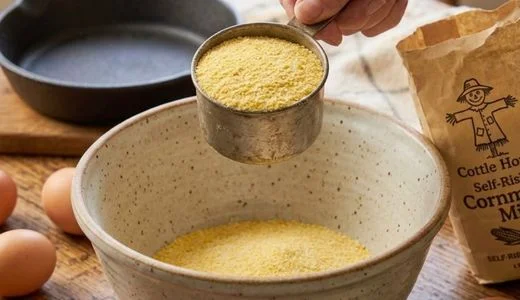
Step 2 -Measure the Cornmeal and Crack the Eggs
Add 2 cups of self-rising cornmeal mix to a large mixing bowl. Crack in 2 eggs directly into the cornmeal. Give it a quick stir to break up the yolks.
Step 3 -Add the Buttermilk
Pour in the whole buttermilk a little at a time, stirring as you go. Keep adding and stirring until the batter reaches a smooth, pourable consistency -not too thick and gummy, not too thin and watery. Think of it as landing somewhere between pancake batter and cake batter. This is the step that requires feel rather than a precise measurement. When it flows easily off the spoon and settles flat in the bowl, you are there.
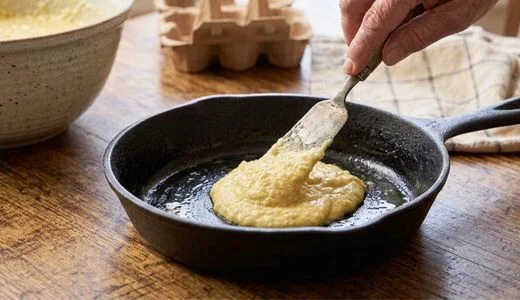
Step 4 -Pour Into the Cold Skillet
Pour the entire bowl of batter into your prepared, greased cold cast-iron skillet. Use a spoon or spatula to scrape the bowl completely clean. The batter should settle evenly in the pan.
Step 5 -Bake at 400°F
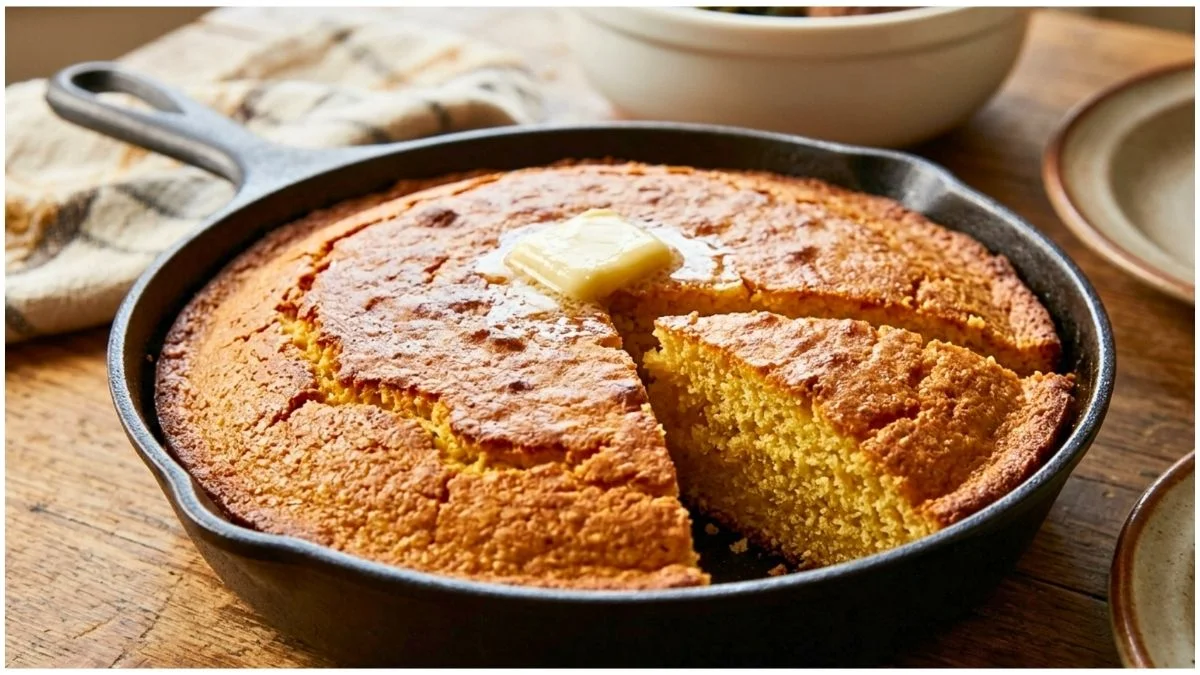
Place the skillet into the preheated 400°F oven. Bake for approximately 20–25 minutes, or until the top is a deep golden brown and the edges have pulled away slightly from the sides of the skillet. The crust should look set and have a slight crispiness at the rim.
Step 6 -Turn Out and Use the Butter Knife Trick
Remove the skillet carefully using oven mitts. Flip the cornbread out onto a plate immediately -do not let it sit in the pan or it will steam and soften. Then, slide a regular butter knife completely under the cornbread round to prop it up off the plate.
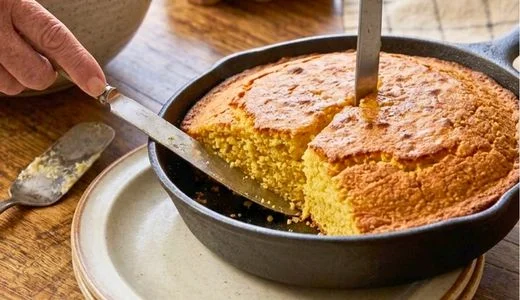
This is Brenda’s signature move: it allows air to circulate underneath, which keeps the beautiful crispy bottom from going soggy as it cools. Let it rest for a few minutes, then slice and serve.
Pro Tips for Getting the Brenda Gantt Cornbread Flavor Just Right
Getting this recipe right is less about precision and more about understanding a few key principles. Here is what separates a good cornbread from a great one.
1. Don’t skip the whole buttermilk
The fat and acidity in whole buttermilk are doing critical work here. Using skim milk or a low-fat substitute will produce a noticeably drier, less flavorful crumb. If you do not have buttermilk on hand, the vinegar-and-milk substitute works in an emergency, but make a grocery run when you can.
2. Grease the skillet heavily -then grease it again
Brenda specifically says to grease it “heavily,” and she means it. A lightly oiled pan will stick. A well-oiled pan will release the cornbread cleanly and build that stunning golden crust.
3. Use a cold skillet
Unlike some Southern cornbread recipes that call for heating the greased skillet first (which creates an immediate sizzle and a very crispy bottom crust), Brenda’s method uses a cold skillet. This produces a slightly gentler crust that is still crispy but allows the interior to set more evenly. Both methods produce great results -but for this specific recipe, stay cold.
4. Do not overmix
Stir until the batter is smooth and the dry ingredients are fully incorporated, then stop. Overworking the batter develops gluten and can make the cornbread dense and tough.
5. Watch the top, not the clock
Ovens vary. Start checking at the 20-minute mark, and pull it when the top is deeply golden and the edges show color. A pale top means it needs more time.
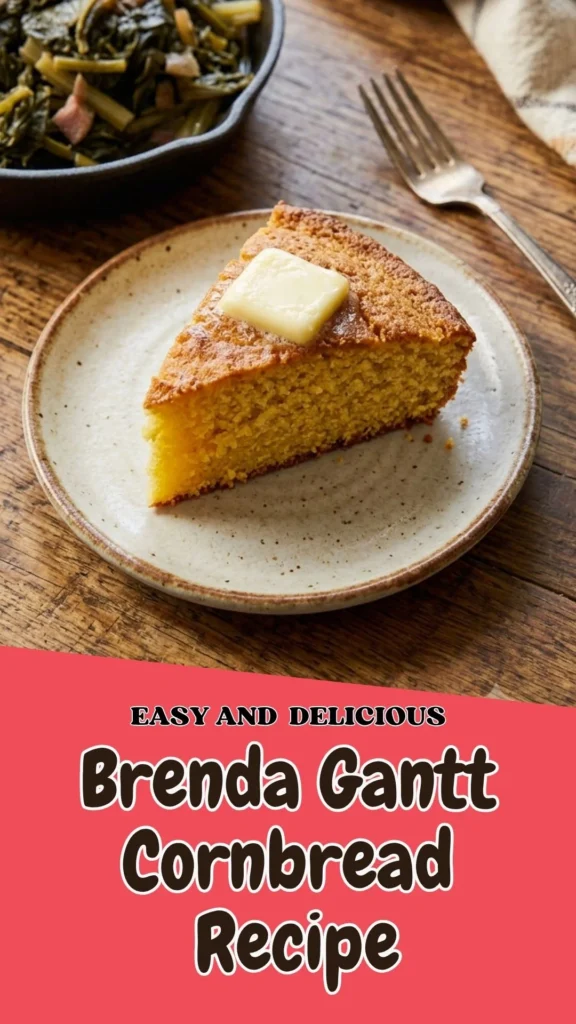
6. The butter knife trick is not optional
If you skip it, the steam from the hot cornbread will condense under the round and make the bottom soggy within minutes. One small knife propped underneath preserves that crust perfectly.
Easy Variations to Customize This Southern Cornbread Recipe
Once you have mastered the classic Brenda Gantt cornbread recipe, there are easy ways to make it your own without losing that authentic Southern character.
1. Jalapeño Cheddar Cornbread
Stir ½ cup of shredded sharp cheddar cheese and 2 tablespoons of finely diced fresh jalapeño into the batter before pouring. The cheese melts into pockets of richness and the jalapeño adds a gentle heat.
2. Crackling Cornbread
Fold 3–4 tablespoons of pork cracklins (crumbled) into the finished batter. This is the old-school Southern version that many grandmothers made as a way to use every part of the hog. It adds a savory, porky depth that is deeply traditional.
3. Herb Cornbread
Add 1 tablespoon of fresh chopped chives and 1 teaspoon of fresh thyme to the batter. Works beautifully alongside roasted chicken or pork.
4. Honey Butter Finish
Not a batter addition, but brush the hot cornbread with honey butter (equal parts softened butter and honey) the moment it comes out of the oven for a sweet-savory version that goes perfectly with barbecue.
5. Individual Corn Sticks
Use a cast-iron corn stick mold instead of a round skillet. Reduce baking time to 12–15 minutes and watch carefully.
Best Ways to Serve Brenda Gantt Cornbread in Your Meals
Brenda Gantt’s Southern cornbread is one of those rare dishes that fits every seat at the table -from a humble weeknight supper to a full holiday spread. Here are the best ways to make it the star or the supporting player of your meal.
1. Classic Southern Sunday Dinner
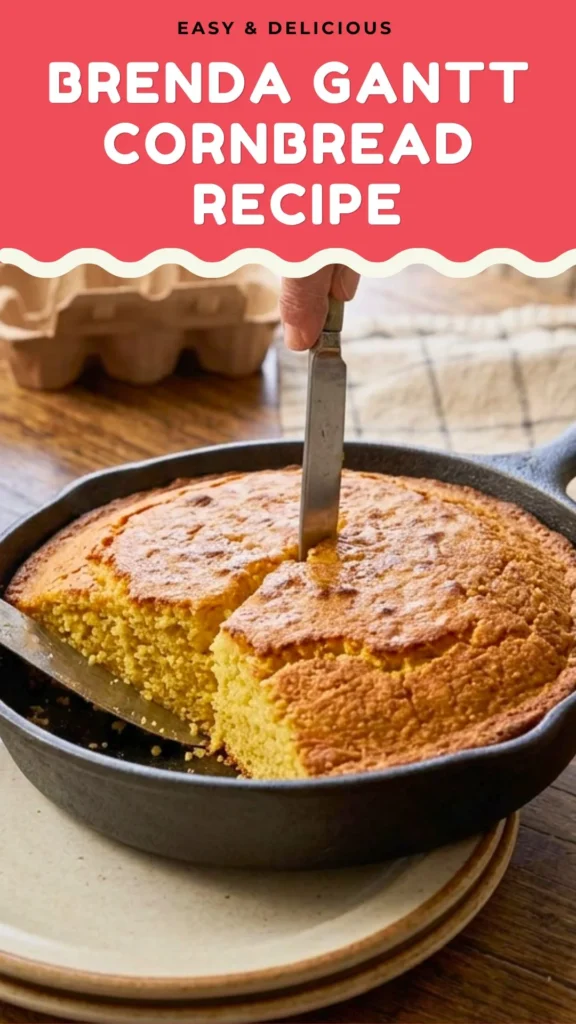
Serve wedges of warm cornbread alongside a pot of slow-cooked pinto beans or butter beans, collard greens braised with smoked turkey, and fried okra. This is the traditional Southern plate that Brenda’s recipe was built for. The cornbread soaks up the pot likker (the flavorful liquid from the greens) in the most satisfying way.
2. With Chili
A thick wedge of this cornbread next to a bowl of beef or turkey chili is one of the great cold-weather combinations. The savory, slightly tangy crumb complements the spice and richness of the chili perfectly.
3. Crumbled in Milk or Buttermilk
This is an old-fashioned Southern supper that older generations grew up eating. Break leftover cornbread into a glass, pour cold whole milk over it, and eat it like a cereal. Simple, filling, and surprisingly delicious.
4. With Butter and Sorghum Syrup
Serve hot from the oven with a pat of salted butter melting over the top and a drizzle of sorghum syrup or cane syrup alongside. This is the Southern version of bread and butter, and it needs nothing else.
5. Alongside Soups and Stews
Chicken and dumpling soup, vegetable beef stew, ham and bean soup -all of them are elevated by a piece of this cornbread for dipping and soaking.
6. As a Stuffing Base
Crumble day-old cornbread to use as the base for a traditional Southern cornbread dressing at Thanksgiving. It is far more flavorful than white bread stuffing and holds its texture beautifully after baking a second time.
7. Breakfast Plate
Pair a warm slice with scrambled eggs, country ham, and a cup of strong coffee for a proper Southern breakfast that will hold you until midday.
How to Store Brenda Gantt Cornbread and Keep It Fresh
Room Temperature: Allow the cornbread to cool completely, then wrap it tightly in plastic wrap or place it in an airtight container. It will keep at room temperature for up to 2 days. After that, the texture begins to dry out significantly.
Refrigerator: Stored in an airtight container, cornbread keeps in the refrigerator for up to 5 days. The crust will soften in the fridge, but it is still perfectly good for crumbling into milk or using as stuffing.
Freezer: Wrap individual slices in plastic wrap, then place in a zip-top freezer bag. Frozen cornbread keeps for up to 3 months. Thaw overnight in the refrigerator or at room temperature for a couple of hours.
Reheating: For the best results, reheat slices in a preheated 350°F oven for 8–10 minutes, or in a dry skillet over medium-low heat for 2–3 minutes per side. This revives the crust far better than the microwave, which makes cornbread rubbery. If you are in a hurry, the microwave works -20–30 seconds on medium power is enough.
Nutrition Facts and Dietary Notes for This Southern Cornbread
Estimated Nutrition Per Slice (1/8 of recipe, approximate):
| Nutrient | Per Serving |
|---|---|
| Calories | ~185 kcal |
| Carbohydrates | ~28g |
| Protein | ~5g |
| Fat | ~6g |
| Sodium | ~380mg |
| Fiber | ~1g |
Values are estimates based on standard ingredient brands. Actual figures will vary based on specific products used.
Dietary Notes:
- Gluten-Free: Standard self-rising cornmeal mix contains wheat flour. For a gluten-free version, use a certified gluten-free cornmeal mix and verify that your buttermilk brand is gluten-free.
- Dairy-Free / Vegan: Replace buttermilk with oat milk + 1 tablespoon apple cider vinegar. Replace eggs with flax eggs (1 tablespoon ground flax + 3 tablespoons water per egg). The texture will be slightly different but still enjoyable.
- Lower Sodium: Choose a low-sodium self-rising cornmeal mix if available, as most of the sodium in this recipe comes from the mix itself.
- Naturally Nut-Free and free of refined sugar.
Final Thoughts on the Brenda Gantt Cornbread Recipe
There is a reason the Brenda Gantt cornbread recipe became a phenomenon -it is genuinely, unpretentiously good. It does not try to be trendy. It does not add sugar or turn itself into a dessert. It is just exactly what Southern buttermilk cornbread has always been: a golden, slightly crispy, deeply satisfying bread that makes every meal feel more complete.
Brenda Gantt Cornbread Recipe
Ingredients
Method
- Preheat your oven to 400°F. While the oven heats, add 2–3 tablespoons of shortening or vegetable oil to your cast-iron skillet and coat it heavily. Every inch of the surface -bottom, sides, all the way up to the rim -should be well greased. Do not put the skillet in the oven yet; it goes in cold.
- Add 2 cups of self-rising cornmeal mix to a large mixing bowl. Crack in 2 eggs directly into the cornmeal. Give it a quick stir to break up the yolks.
- Pour in the whole buttermilk a little at a time, stirring as you go. Keep adding and stirring until the batter reaches a smooth, pourable consistency -not too thick and gummy, not too thin and watery. Think of it as landing somewhere between pancake batter and cake batter. This is the step that requires feel rather than a precise measurement. When it flows easily off the spoon and settles flat in the bowl, you are there.
- Pour the entire bowl of batter into your prepared, greased cold cast-iron skillet. Use a spoon or spatula to scrape the bowl completely clean. The batter should settle evenly in the pan.
- Place the skillet into the preheated 400°F oven. Bake for approximately 20–25 minutes, or until the top is a deep golden brown and the edges have pulled away slightly from the sides of the skillet. The crust should look set and have a slight crispiness at the rim.
- Remove the skillet carefully using oven mitts. Flip the cornbread out onto a plate immediately -do not let it sit in the pan or it will steam and soften. Then, slide a regular butter knife completely under the cornbread round to prop it up off the plate. This is Brenda’s signature move: it allows air to circulate underneath, which keeps the beautiful crispy bottom from going soggy as it cools. Let it rest for a few minutes, then slice and serve.
Video
Notes
- Gluten-Free: Standard self-rising cornmeal mix contains wheat flour. For a gluten-free version, use a certified gluten-free cornmeal mix and verify that your buttermilk brand is gluten-free.
- Dairy-Free / Vegan: Replace buttermilk with oat milk + 1 tablespoon apple cider vinegar. Replace eggs with flax eggs (1 tablespoon ground flax + 3 tablespoons water per egg). The texture will be slightly different but still enjoyable.
- Lower Sodium: Choose a low-sodium self-rising cornmeal mix if available, as most of the sodium in this recipe comes from the mix itself.
- Naturally Nut-Free and free of refined sugar.
Whether you serve it alongside a pot of beans, crumble it into a cold glass of milk, or lay it out at a holiday table, this recipe rewards you every single time. Make it once and it will become a staple.
Have you tried the Brenda Gantt cornbread recipe? Leave a comment below and let me know how it turned out, what you served it with, or any variations you tried. I read every one.
You Might Also Like:
We’d love to hear what you think of this recipe! Give it a try and let us know how it turned out by leaving a comment below. Don’t forget to follow us on Pinterest, Facebook and YouTube for more delicious recipes, cooking inspiration, and kitchen tips. Your feedback and support help us continue creating content you’ll love!
Thanks for the recipe
Thanks Carry