
Before I fired up my smoker for this Terry Black brisket recipe, I did what any nosy home cook would do: I read what real diners say. One long Reddit thread began with a photo of a dry, dusty lean slice from the Austin location, and the replies split fast. Some called the place overhyped. Others defended it, and the top advice was simple: skip the lean and ask for moist, point-end slices.
That lesson shaped this copycat of Terry Black’s Texas-style smoked brisket. Expect a peppery bark, clean smoke, juicy slices, and fat that melts on the first bite. Even a pit cooking 200+ briskets a day has off days, so cook by probe feel, not the clock.
A quick note: this is a reconstruction from a pitmaster walkthrough and a review, not an official recipe.
What Is Terry Black’s Brisket and Why Do Fans Love It?
Terry Black’s Barbecue serves Central Texas-style barbecue, and brisket is the headliner. It starts with a whole packer brisket, ideally prime grade, seasoned with a simple dry rub of salt and pepper and smoked low and slow. There’s no glaze, and no sauce is required.
The flavor is peppery and beefy, with smoke and pepper in balance. The bark is dark and textured. The fat renders until it turns yellow and silky, and when the brisket is cooked right, even the lean slices stay juicy.
Compared with Kansas City-style brisket, which leans sweet and saucy, this Texas-style smoked brisket lets the beef do the talking. Compared with foil-wrapped brisket, the butcher paper wrap keeps the bark firmer. Fans love it because it’s Texas barbecue at its purest: few ingredients, big flavor, and meat tender enough to tear apart without a knife.
The Nostalgic History Behind Terry Black’s Texas-Style Brisket
Terry Black’s Barbecue opened in 2014 and is run by twin brothers Michael and Mark Black. Barbecue runs in the family. They’re nephews of Kent Black of Black’s BBQ in Lockhart, a town closely tied to Central Texas smokehouse tradition. A Time Out review notes the rub is just salt and pepper, and the Michelin Guide describes the brisket as slow-smoked prime.
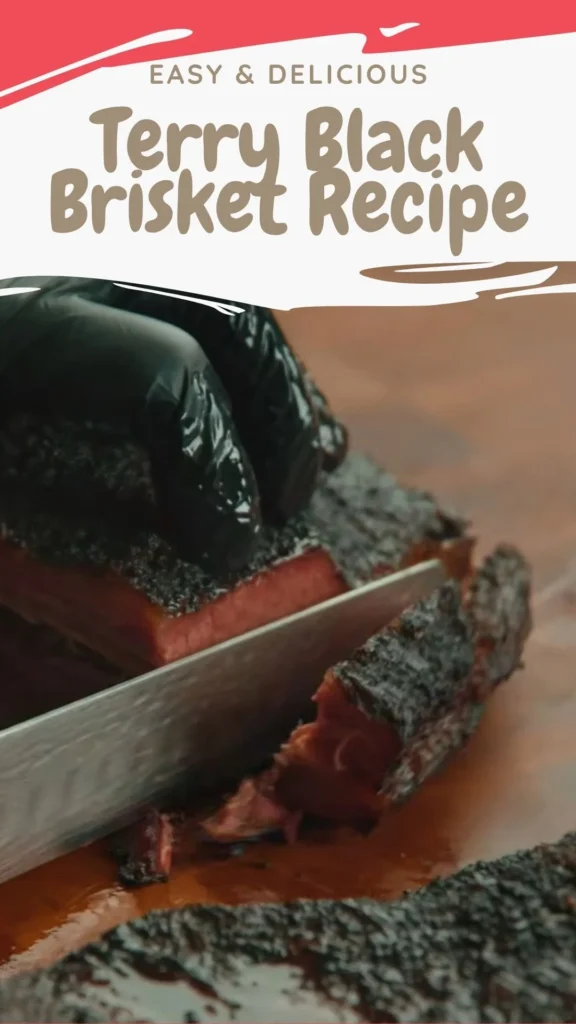
The brisket is smoked for 12 to 14 hours in a Moberg smoker. A Mad Scientist BBQ video says the restaurant cooks 200+ briskets a day, and the method stays traditional even at that scale.
What sets it apart from newer, flashier styles, such as sugary rubs, heavy sauces, and competition-style trimming, is restraint. This is the classic Central Texas brisket approach: trust the beef and let the pit do the work.
What Real Diners Say About Terry Black’s Brisket (And What It Means for Your Cook)
The Reddit thread I mentioned is a couple of years old. It started with one photo, a slice of lean brisket from the Austin location that looked dry and dusty, and the thread split almost immediately.
The complaints
Plenty of people said Terry Black’s is overhyped and a convenient stop for tourists, not a top-tier Austin pick. Several described hit-or-miss visits, with brisket that was great one week and dry a few days later. One person described a great slice on par with Franklin’s and a dry one another time. A few thought quality had slipped over the years, though I can’t verify that. Others complained about crowds, prices, and mediocre sides, and one diner said an expensive beef rib was mostly bone and fat.
The defense
Just as many replies were practical:
- The most popular advice was to stop ordering lean brisket. The flat is drier by nature, so ask for moist, fatty, or point-end slices.
- The slicers cut it in front of you, so you can ask for a different piece or a fattier cut.
- If you get a bad slice, take it back. Many said they’d replace it.
- Some suspected the photographed slice had sat under warming lights too long.
- Others said they’d always had juicy brisket there, and some praised the ribs and the jalapeño cheese sausage. One out-of-state visitor was satisfied and even got a pit tour.
The alternatives
Locals kept recommending other Austin spots, and many preferred the original Black’s in Lockhart. A few defended the Terry Black’s Lockhart location.
What This Taught Me for the Copycat Recipe
- Brisket is hard, even at scale. One commenter said it best: smoking brisket is difficult, and any place can have a bad day. I watched a video of them cooking 200+ briskets a day, and they still get misses.
- The lean flat is unforgiving. If you cook for the flat, watch it closely. Mike Black checks doneness with a probe in the lean side, not a clock.
- The point is your safety net. The fatty end stays juicy, which matches the video, where the fat rendered until it practically melted.
- Don’t let it sit. If old, reheated slices dried out that photo, resting and slicing your brisket fresh matters.
Key Ingredients That Give Terry Black Brisket Its Signature Flavor
With so few ingredients, each one has to earn its place.
Whole Packer Brisket (Prime Grade if Possible): A packer includes both the lean flat and the fatty point. Prime grade has more marbling, which helps deliver juicy slices and buttery fat.
Coarse Black Pepper: This is the backbone of the bark. The coarse grind gives the crust its texture, and even coverage matters for that signature peppery bite.
Kosher Salt: It seasons the meat deeply and balances the pepper. The larger flakes are easy to apply evenly.
Post Oak (or a Similar Hardwood): The classic Central Texas wood gives a mellow, clean smoke that supports the beef instead of overpowering it.
Apple Cider Vinegar: Spritzed during the cook, it keeps the surface moist so the bark doesn’t char. It also helps the butcher paper release cleanly.
Unwaxed Butcher Paper: It protects the brisket while letting it breathe, so the bark stays firmer than it does under foil.
Terry Black Brisket Recipe: Ingredient List
| Ingredient | Quantity | Notes & Substitutions |
|---|---|---|
| Whole packer brisket | 1 whole packer, prime grade ideally | Choice grade works too. The sources don’t give a size, so scale the rub to your cut |
| Coarse black pepper | About ½ cup | Equal parts with salt by volume, adjusted to coat evenly (my adaptation) |
| Kosher salt | About ½ cup | Same equal-parts ratio. The sources only say “salt and pepper” |
| Apple cider vinegar | In a spray bottle | No dilution is given for the original method. Use it straight, or cut it with a little water for a milder spritz |
| Post oak wood | As needed for a 12–14 hour cook | Post oak is the usual Central Texas choice (my addition). Oak, hickory, or pecan also work |
| Unwaxed food-grade butcher paper | 1 large sheet or roll | Foil works too but gives a softer bark |
| Cheap probe or ice pick | 1 | For testing doneness by feel |
Tools You Need to Make Terry Black Brisket at Home
- Smoker (offset preferred; pellet, kamado, or drum smokers can be adapted)
- Spray bottle for the apple cider vinegar
- Unwaxed butcher paper
- Cheap probe or ice pick
- Pit thermometer to track smoker temperature
- Long, sharp slicing knife
- Large cutting board with a juice groove
- Heat-resistant gloves
- Insulated cooler or oven for resting (optional)
Prep Time: About 45 minutes (trimming and seasoning; your trim time may vary)
Cook Time: 12–14 hours
Rest Time: 1 hour or more
Total Time: Roughly 14–16 hours
Servings: 12–20, depending on brisket size
Steps to Make This Terry Black Brisket Recipe
Step 1: Trim and Season
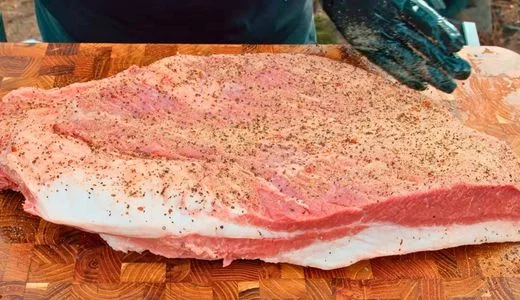
Trim your brisket. Terry Black’s trim is covered in a separate video, so I’m not detailing it here. Season generously with equal parts coarse black pepper and kosher salt, aiming for even coverage. Even pepper coverage is what gives the bark its balanced bite.
Step 2: Load the Pit
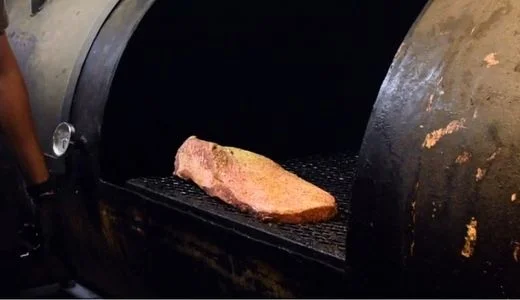
On an offset smoker, place the fatty (point) end toward the fire and the lean (flat) end toward the smokestack. The walkthrough doesn’t say whether the fat cap goes up or down, so use what works best on your pit.
Step 3: Start the Fire
Terry Black’s commercial pit starts around 250°F and runs slightly smokier early on, since a cool brisket takes smoke better. It then rises gradually to 275°F and possibly 300°F, depending on weather. For a home smoker, Mike Black suggests starting at 200 to 225°F. Every pit runs differently, so learn yours.
Step 4: Check the Bark (About 3 Hours In)
Confirm the bark is starting to form. Drain any liquid pooled on top, which helps the bark. Start spritzing with apple cider vinegar to keep the surface moist and prevent charring.
Step 5: Wrap (Around Hour 8 of a Roughly 12-Hour Cook)
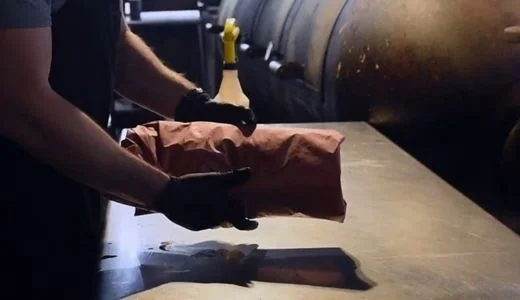
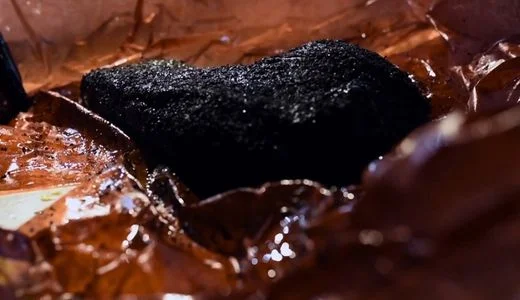
Wrap once the fat begins to bubble and the bark has set. Spritz with vinegar first so the paper doesn’t stick and pull off the bark, then wrap the brisket in butcher paper.
Step 6: Finish the Cook
In the walkthrough, they ran the pit near 300°F for the final stretch. At the 12-hour mark, feel the sides and underside of the brisket for softness. Home smokers run cooler, so expect your timeline to differ.
Step 7: Check Doneness
Open the paper carefully to avoid tearing off the bark. Probe about 3 inches into the lean side. It should slide in with no resistance. Skip the fatty side, which gives little resistance anyway. Some cooks pull around 205°F, but treat that number only as a cue to start probing.
Step 8: Rest and Slice
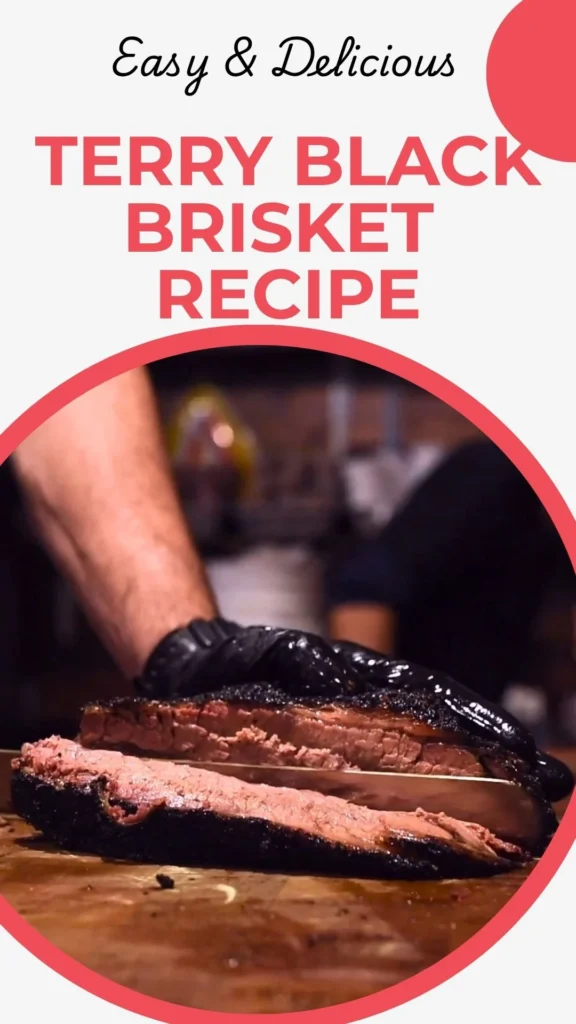
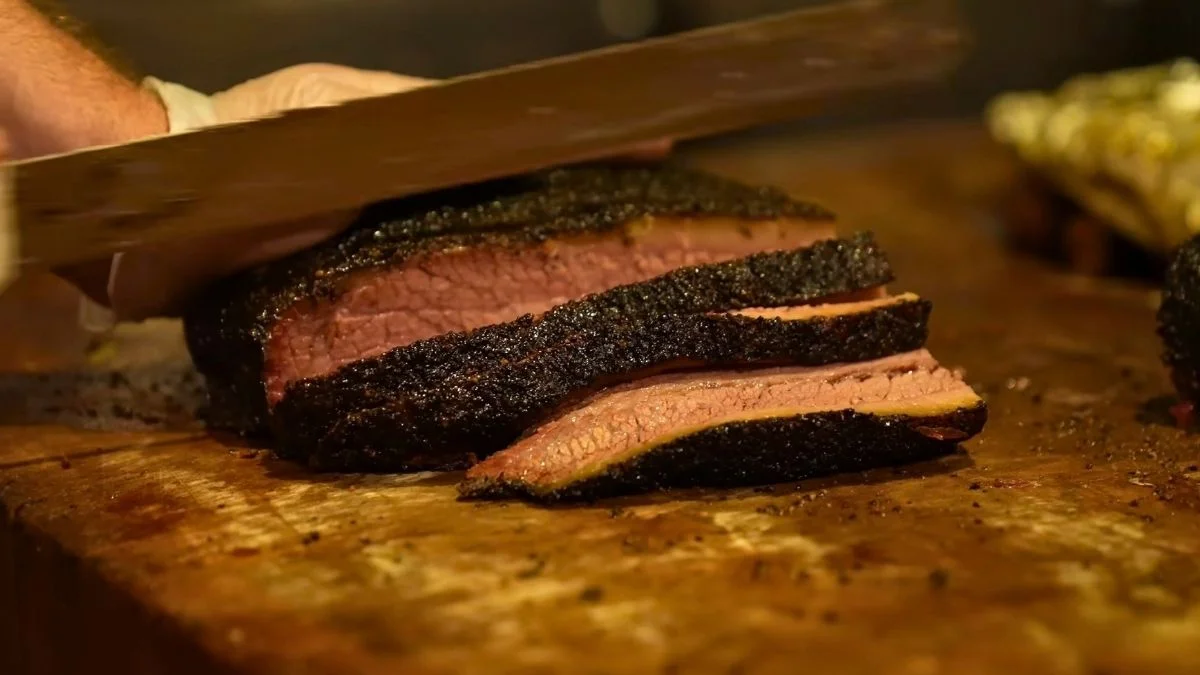
Rest the brisket wrapped for about an hour or more (my addition, since the sources don’t cover resting). Slice against the grain, and slice fresh rather than ahead of time.
Pro Tips for Getting the Terry Black Brisket Flavor Just Right
How do you know brisket is done?
Trust the probe, not the clock. It’s ready when a probe slides about 3 inches into the lean side with no resistance. The 12 to 14 hour window comes from a large commercial pit, so treat it as a reference.
Should you wrap brisket?
It isn’t required, but Terry Black’s wraps in butcher paper once the fat bubbles and the bark has set.
Butcher paper or foil?
Paper keeps the bark from steaming, and it’s Mike Black’s preference. Foil gives a softer bark but isn’t wrong.
Spritz before wrapping
A coat of apple cider vinegar keeps the paper from sticking and pulling off your bark.
Drain pooled liquid
Around the three-hour mark, tip off any puddle on top so the bark can set.
Don’t rely on temperature alone
Pulling around 205°F is common, but use it as a signal to start probing.
Watch the flat closely
It’s the unforgiving part. The fatty point is your safety net, so if the flat runs a little dry, the point can still save the plate.
Open the paper gently
Tearing off the bark undoes hours of work.
Slice fresh
Sliced brisket left sitting dries out fast. Rest, then slice against the grain right before serving.
Easy Variations to Customize This Terry Black Brisket Recipe
Foil-Wrapped Version: Swap butcher paper for foil. You’ll get a softer bark and a moister, more steamed finish.
Home Smoker Version: Start at 200 to 225°F, following Mike Black’s home guidance. Expect a longer cook than the restaurant’s, and rely on probe feel.
Wood Swap: Use oak, hickory, or pecan if post oak isn’t available near you.
Pellet or Kamado Version: Keep the same rub, spritz, and wrap timing, and adjust temperature control to suit your cooker.
Garlic-Pepper Twist: Add a little granulated garlic to the rub. It departs from the salt-and-pepper original, but it’s a fun variation.
Brisket Flat Only: A smaller cut cooks faster, so start probing earlier and watch it closely, since the flat dries out more easily.
Best Ways to Serve Terry Black Brisket in Your Meals
Slice against the grain and serve it warm on butcher paper. This brisket doesn’t need sauce, but a few on the side are a nice touch. If you’re serving a crowd, offer both point-end and flat slices, just as diners are advised to ask for moist cuts.
Table Sauces: The sauces in the Mad Scientist BBQ video were an original (thin, uncooked, sweet, tangy, and ketchup-like), a sweet mustard-based sauce, and a spicy one that moves from vinegar to sweetness to heat. The vinegar tang cuts through the richness of fatty brisket.
Classic Sides: Green beans, creamy mac and cheese, Terry Black’s Creamed Corn Recipe, a cornbread muffin with crispy edges, and slaw were all mentioned. The slaw adds crunch and acidity that balance the fat. Serve the brisket with Terry Black BBQ Green Beans Recipe, along with creamy mac and cheese, cornbread, and slaw. These classic BBQ sides add freshness, creaminess, and texture to balance the rich, smoky brisket.
Texas Plate Extras: Pickles, sliced onions, and white bread are traditional Central Texas add-ons, and they make a simple, satisfying plate.
Brisket Sandwich: Pile chopped or sliced brisket on a soft bun with pickles and a drizzle of your favorite sauce.
Brisket Tacos: Warm corn tortillas, chopped brisket, diced onion, cilantro, and a squeeze of lime turn leftovers into a great next-day dinner.
Brisket Mac and Cheese: Fold chopped brisket into baked mac and cheese for a rich, comforting main.
Brisket Breakfast Hash: Crisp up potatoes and onions in a skillet, add chopped brisket, and top with a fried egg.
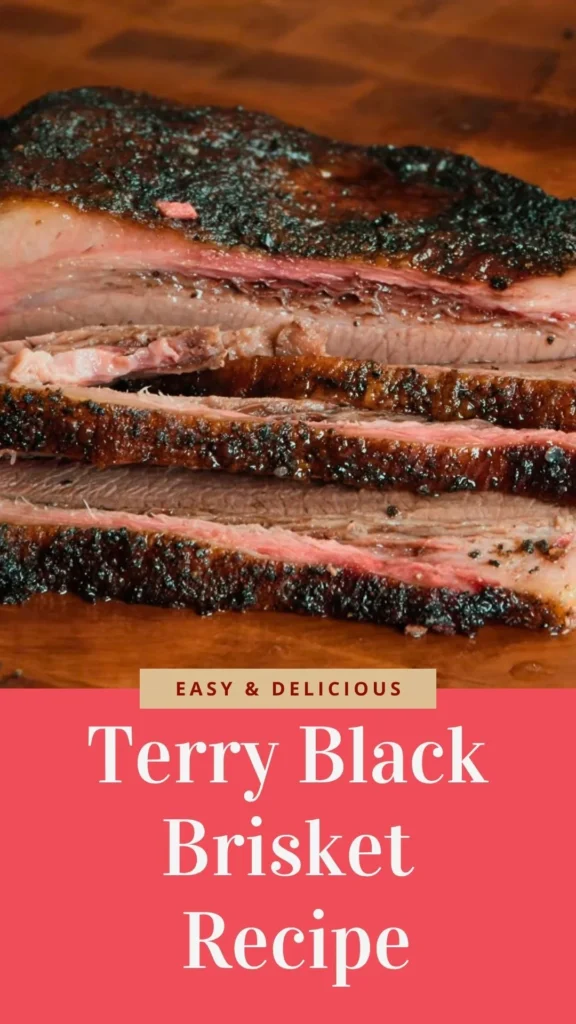
Try the plain slices first, though. The bark, smoke, and beef come through best without anything on top.
How to Store and Reheat Terry Black Brisket
Refrigerator: Cool the brisket, then store it in an airtight container for up to 4 days. Keep it unsliced if possible, since larger pieces hold moisture better.
Freezer: Wrap tightly or vacuum-seal and freeze for up to 3 months. Thaw overnight in the fridge before reheating.
Reheating: Wrap the brisket in foil with a splash of beef broth and warm it in a 250–275°F oven until heated through. Slices take about 20 to 30 minutes. Slice only what you’re serving, since reheated slices dry out quickly. A gentle sous vide bath also works well. Use the microwave only as a last resort, at low power in short bursts, since it can dry out the meat and soften the bark.
Nutrition Facts and Dietary Notes for Terry Black Brisket
Estimate per 4 oz cooked serving of sliced brisket (mixed lean and fatty cuts):
| Calories | ~350 kcal |
| Protein | ~30g |
| Fat | ~24g |
| Carbohydrates | <1g |
| Sodium | Varies with how much salt sticks to the meat |
Gluten-Free: Naturally yes, since the recipe is just brisket, salt, pepper, and smoke. Check any sauces or sides.
Keto / Low-Carb: Yes, with negligible carbs from the rub.
Paleo-Friendly: Yes, when served without sugary sauces.
Vegan: Not suitable, since this is a beef recipe.
Health Notes: Brisket is a good source of protein, iron, zinc, and B12. It’s also rich and fatty, so enjoy it in sensible portions alongside vegetables.
Nutritional values are estimates and will vary by cut, trim, and portion size.
Terry Black Brisket Recipe
Ingredients
Method
- Trim your brisket. Terry Black’s trim is covered in a separate video, so I’m not detailing it here. Season generously with equal parts coarse black pepper and kosher salt, aiming for even coverage. Even pepper coverage is what gives the bark its balanced bite.
- On an offset smoker, place the fatty (point) end toward the fire and the lean (flat) end toward the smokestack. The walkthrough doesn’t say whether the fat cap goes up or down, so use what works best on your pit.
- Terry Black’s commercial pit starts around 250°F and runs slightly smokier early on, since a cool brisket takes smoke better. It then rises gradually to 275°F and possibly 300°F, depending on weather. For a home smoker, Mike Black suggests starting at 200 to 225°F. Every pit runs differently, so learn yours.
- Confirm the bark is starting to form. Drain any liquid pooled on top, which helps the bark. Start spritzing with apple cider vinegar to keep the surface moist and prevent charring.
- Wrap once the fat begins to bubble and the bark has set. Spritz with vinegar first so the paper doesn’t stick and pull off the bark, then wrap the brisket in butcher paper.
- In the walkthrough, they ran the pit near 300°F for the final stretch. At the 12-hour mark, feel the sides and underside of the brisket for softness. Home smokers run cooler, so expect your timeline to differ.
- Open the paper carefully to avoid tearing off the bark. Probe about 3 inches into the lean side. It should slide in with no resistance. Skip the fatty side, which gives little resistance anyway. Some cooks pull around 205°F, but treat that number only as a cue to start probing.
- Rest the brisket wrapped for about an hour or more (my addition, since the sources don’t cover resting). Slice against the grain, and slice fresh rather than ahead of time.
Video
Notes
This Terry Black brisket recipe proves that great Texas barbecue comes down to simple ingredients, steady smoke, and patience. Season well, keep the fire steady, spritz, wrap in butcher paper, and let the probe tell you when it’s ready. Even the pros have off days, so don’t be discouraged if your first cook isn’t perfect.
Did you try it? Tell me in the comments how your bark turned out, what pit you used, and whether you went with paper or foil. Questions are welcome too. For more, browse the blog’s copycat restaurant recipes and Texas barbecue guides.
This is an unofficial copycat recipe based on publicly shared pitmaster information and is not affiliated with Terry Black’s Barbecue.